8 Powerful AI Sales Tracking Tools for Consultants to Improve Revenue Performance
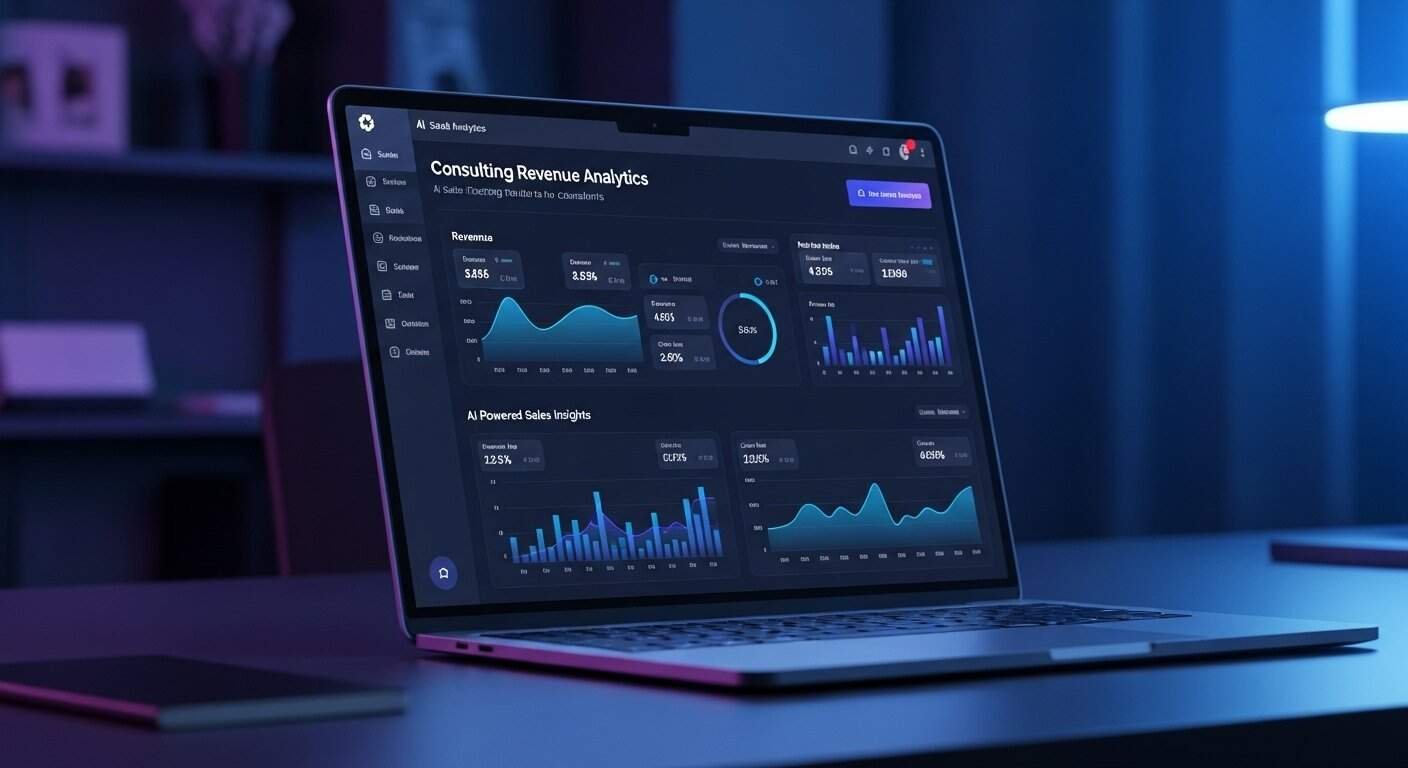
AI sales tracking tools for consultants help service-based businesses measure sales performance, track deal metrics, monitor close rates, and analyze revenue performance across consulting offers.
Consultants often focus heavily on delivering services, but many struggle to track the effectiveness of their sales activities. Without clear visibility into sales performance, it becomes difficult to understand which offers convert best and which sales strategies produce the strongest revenue results.
Many consultants manage sales activity through scattered spreadsheets, basic payment records, or fragmented analytics tools. This often leads to limited visibility into key performance indicators such as:
- Deal conversion rates
- Offer-level revenue performance
- Sales close rates
- Revenue trends across time
- Income forecasting accuracy
AI-powered sales tracking tools solve these problems by providing structured sales performance dashboards and automated analytics systems.
These platforms allow consultants to track deal outcomes, analyze conversion rates, and monitor revenue performance in real time without relying on manual data compilation.
For consultants building a modern digital consulting infrastructure, sales tracking systems represent one part of a broader technology stack. A full overview of this ecosystem can be found in this guide to AI tools for coaches and consultants.
Different Business Use Cases
Sales tracking tools serve different types of consulting businesses depending on their size and operational complexity.
The needs of a solo consultant differ significantly from those of a consulting agency managing multiple sales representatives.
Understanding these different use cases helps identify the most appropriate platform.

Solo Consultants
Solo consultants typically require simple analytics tools that track revenue performance and conversion rates across offers.
Key requirements often include:
- Deal tracking dashboards
- Close rate monitoring
- Revenue performance analysis
- Simple income forecasting
These systems help independent consultants understand which consulting packages generate the most revenue.
Growing Consulting Teams
As consulting businesses grow and begin working with multiple consultants or sales representatives, sales tracking systems must support collaborative reporting.
Growing teams require tools capable of tracking:
- Sales performance by team member
- Deal conversion metrics
- Offer-level performance
- Revenue growth across time
These systems allow consulting firms to understand how different sales representatives contribute to overall revenue.
Consulting Agencies
Consulting agencies often require more advanced analytics tools capable of monitoring large sales pipelines and analyzing deal metrics across multiple clients and offers.
Agency-level systems may include:
- Advanced revenue performance dashboards
- Detailed deal metrics tracking
- Team-level sales analytics
- Revenue forecasting systems
These tools help agency leadership understand how their sales processes influence revenue growth.
Tools for Solo Operators
Independent consultants benefit from simple sales analytics platforms that provide clear visibility into revenue trends and deal outcomes.
Several tools are well suited for solo operators.
1. Notion Sales Tracking Dashboards
Notion provides customizable databases that can be used to track deals and analyze conversion performance.
Consultants can create structured sales tracking systems that include:
- Deal values
- Offer types
- Conversion outcomes
- Close rates
Notion dashboards can display revenue trends and deal metrics visually.
2. Airtable Sales Analytics
Airtable provides flexible database structures that allow consultants to build custom sales analytics systems.
These systems can track:
- consulting offers
- deal stages
- conversion outcomes
- revenue performance
Airtable’s automation features allow consultants to maintain up-to-date sales tracking dashboards.
Sheet-Based Analytics Tools
Many solo consultants still rely on spreadsheet-based systems enhanced with AI analytics integrations.
These systems allow users to track sales outcomes and generate revenue insights through automated calculations.
While simpler than enterprise platforms, they can still provide valuable performance data.
Tools for Growing Teams
Consulting businesses that are expanding often require more structured analytics systems capable of tracking sales performance across multiple team members.
Several tools support these needs.

1. Tableau Sales Analytics
Tableau is a data visualization platform that allows consulting businesses to build advanced sales performance dashboards.
Consultants can analyze metrics such as:
- close rates by offer
- deal size distribution
- revenue growth trends
- team-level sales performance
Tableau dashboards provide deep insights into revenue performance.
2. Power BI Sales Reporting
Power BI is widely used for business analytics and can be configured to track consulting sales performance.
Consulting firms often use Power BI to monitor:
- sales performance dashboards
- deal metrics
- conversion rate trends
- revenue forecasting models
The platform supports large datasets and complex analytics.
3. Metabase Analytics
Metabase is an open-source analytics platform used by many consulting businesses to track revenue metrics and analyze performance trends.
The platform can create dashboards that display:
- deal conversion data
- revenue growth patterns
- performance metrics across consulting offers
Metabase allows teams to explore revenue data in detail.
Tools for Agencies
Consulting agencies often require advanced analytics systems capable of handling large volumes of deal data.
These systems provide deeper insights into revenue performance across teams and offers.
1. Looker
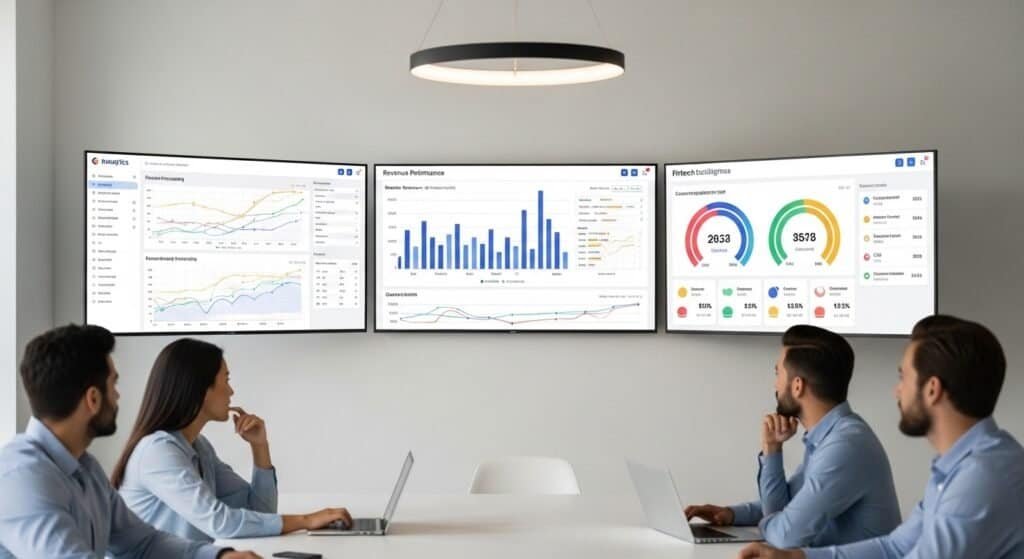
Looker provides enterprise-level analytics dashboards designed to analyze complex business data.
Consulting agencies can track metrics such as:
- team-level close rates
- deal conversion performance
- revenue trends across consulting services
Looker dashboards allow agency leaders to understand revenue performance across the organization.
2. Domo
Domo is a business intelligence platform that consolidates multiple data sources into a single analytics dashboard.
Agencies use Domo to monitor:
- sales performance metrics
- revenue trends
- consulting offer conversions
Domo dashboards provide real-time insights into sales performance.
3. Sisense
Sisense is another enterprise analytics platform capable of managing large data sets and generating deep revenue insights.
Consulting agencies use Sisense dashboards to analyze sales performance at scale.
Feature Overview
AI sales tracking tools typically include several core capabilities that help consultants measure revenue performance effectively.
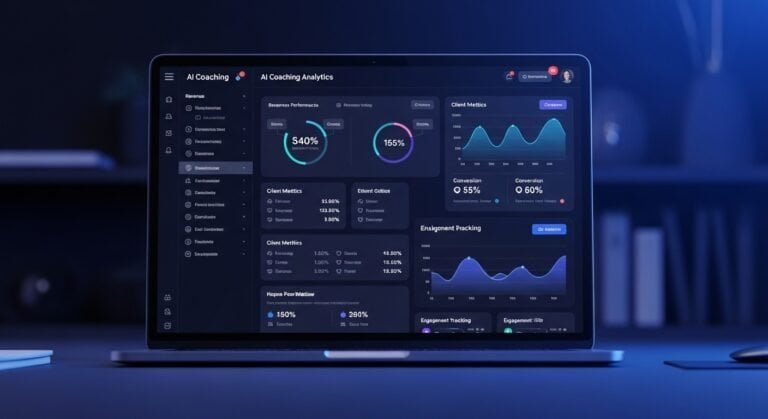
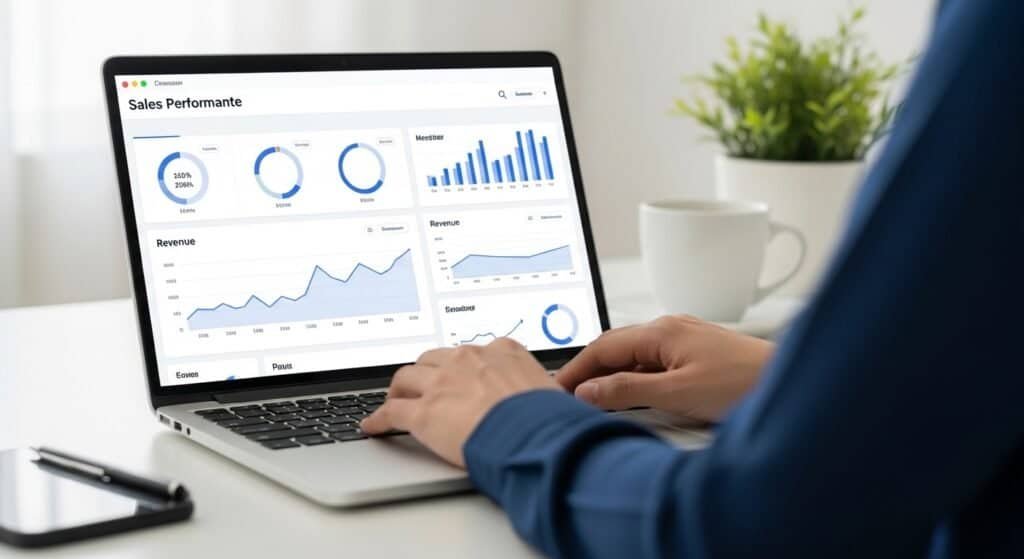
Sales Performance Dashboards
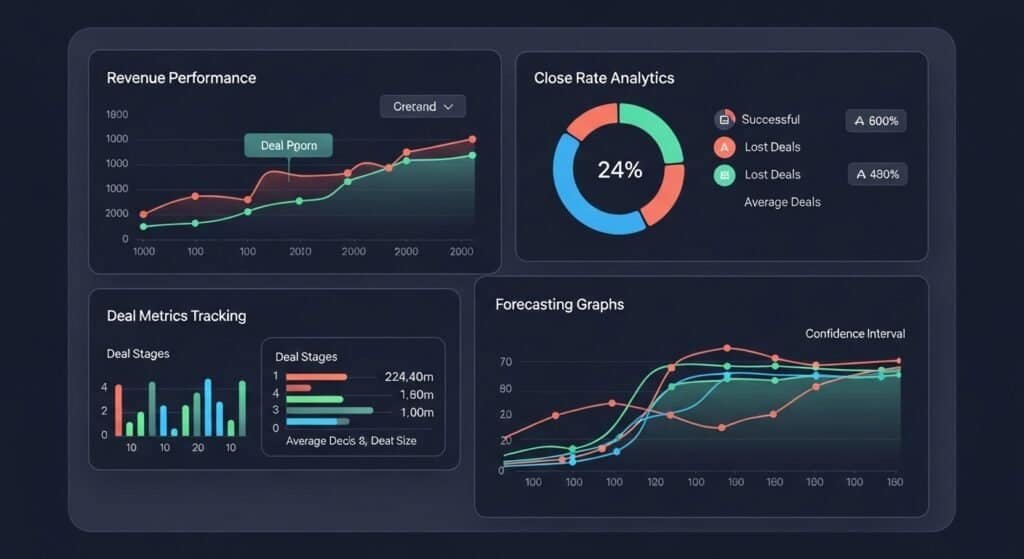
Dashboards provide visual insights into key sales metrics.
These dashboards often display:
- revenue generated by each offer
- deal conversion rates
- revenue trends over time
- average deal value
Visual dashboards help consultants quickly identify performance patterns.
Close Rate Monitoring
Close rate tracking measures the percentage of deals that convert into paying clients.
For example, if a consultant closes 20 deals out of 100 opportunities, the close rate is 20%.
Monitoring close rates allows consultants to evaluate sales effectiveness.
Deal Metrics Tracking
Deal metrics provide insight into the performance of individual consulting offers.
These metrics may include:
- average deal size
- offer conversion rates
- revenue generated by each service
Understanding deal metrics helps consultants refine their service offerings.
Revenue Performance Analytics
Revenue performance analytics measure how consulting income evolves over time.
These tools allow consultants to track:
- monthly revenue growth
- revenue fluctuations
- seasonal patterns
Understanding revenue performance is essential for long-term financial planning.
Income Forecasting
Income forecasting tools estimate future revenue based on historical sales data.
Forecasting systems allow consultants to anticipate revenue trends and plan business growth strategies.
For deeper financial insights, consultants may also integrate sales tracking platforms with systems such as ai coaching revenue tracking software, which helps analyze income patterns across consulting services.
Pricing Differences
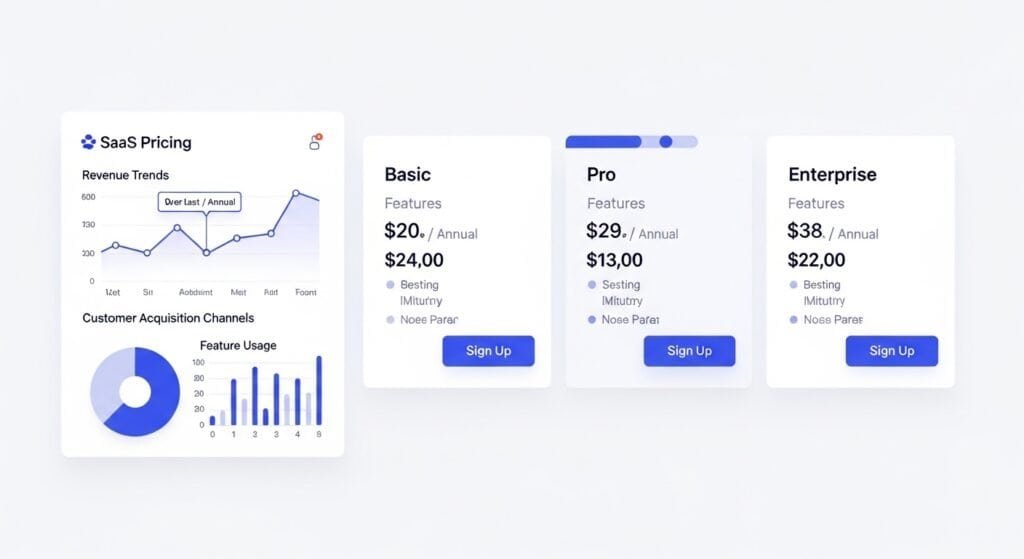
Pricing for sales tracking tools varies significantly depending on platform complexity.
Free Tools
Some analytics platforms offer free versions with limited functionality.
Examples include:
- basic spreadsheet analytics
- simple dashboard systems
These tools are suitable for early-stage consultants.
Mid-Tier Analytics Platforms
Mid-tier analytics tools typically cost between:
$20 to $100 per month
These platforms provide structured dashboards and more powerful data analysis capabilities.
Enterprise Analytics Platforms
Enterprise-level analytics tools may cost:
$500 to several thousand dollars per month
These systems are designed for agencies and large consulting firms that require advanced analytics capabilities.
Choosing the Right Platform
Selecting the right sales tracking tool depends on the size and complexity of the consulting business.
Several factors should be considered when evaluating different platforms.
Business Size
Solo consultants may only require simple analytics dashboards, while agencies often need enterprise-level systems.
Data Complexity
Businesses with large sales datasets benefit from platforms capable of handling advanced analytics.
Visualization Needs
Consultants who rely heavily on visual reporting may prefer tools that specialize in dashboard visualization.
Integration Capabilities
Sales tracking tools should integrate easily with other operational platforms.
For example, many consultants connect analytics platforms with systems such as ai sales pipeline tracking software for consultants to gain deeper insights into deal flow.
Final Thoughts
Consulting businesses generate revenue through a series of deals, offers, and client engagements.
Without clear visibility into sales performance, it becomes difficult to understand which strategies produce consistent revenue growth.
AI sales tracking tools for consultants provide the analytics infrastructure needed to monitor close rates, track deal metrics, analyze revenue performance, and forecast future income.
By implementing structured sales analytics systems, consultants gain the insights required to optimize their offers, improve conversion rates, and build more predictable consulting revenue streams.
As consulting businesses grow, adopting dedicated sales tracking tools becomes an essential step toward building a data-driven consulting operation.
FAQ
1. What are AI sales tracking tools for consultants?
AI sales tracking tools for consultants analyze deal metrics, close rates, revenue performance, and conversion trends to help consultants understand and improve sales outcomes.
2. How do sales tracking tools improve consulting revenue?
These tools provide sales performance dashboards that help consultants identify which offers convert best and where revenue growth opportunities exist.
3. What metrics do sales tracking tools monitor?
Common metrics include close rates, deal values, conversion per offer, revenue trends, and income forecasting insights.
4. Are sales tracking tools different from CRM systems?
Yes. Sales tracking tools focus on performance analytics and revenue insights, while CRM systems manage customer relationships and contact information.
5. Can consultants forecast income using sales tracking tools?
Yes. Many tools analyze historical sales data to estimate future income trends and help consultants plan revenue growth.
Disclaimer
The information provided in this article is for educational and informational purposes only. While we aim to keep content accurate and up to date, software features and availability may change over time. Some links on this page may be affiliate links, meaning we may earn a commission if you purchase through them at no additional cost to you. Always evaluate tools based on your specific business needs before making a decision.