5 Powerful AI Client Journey Mapping Tools for Consultants
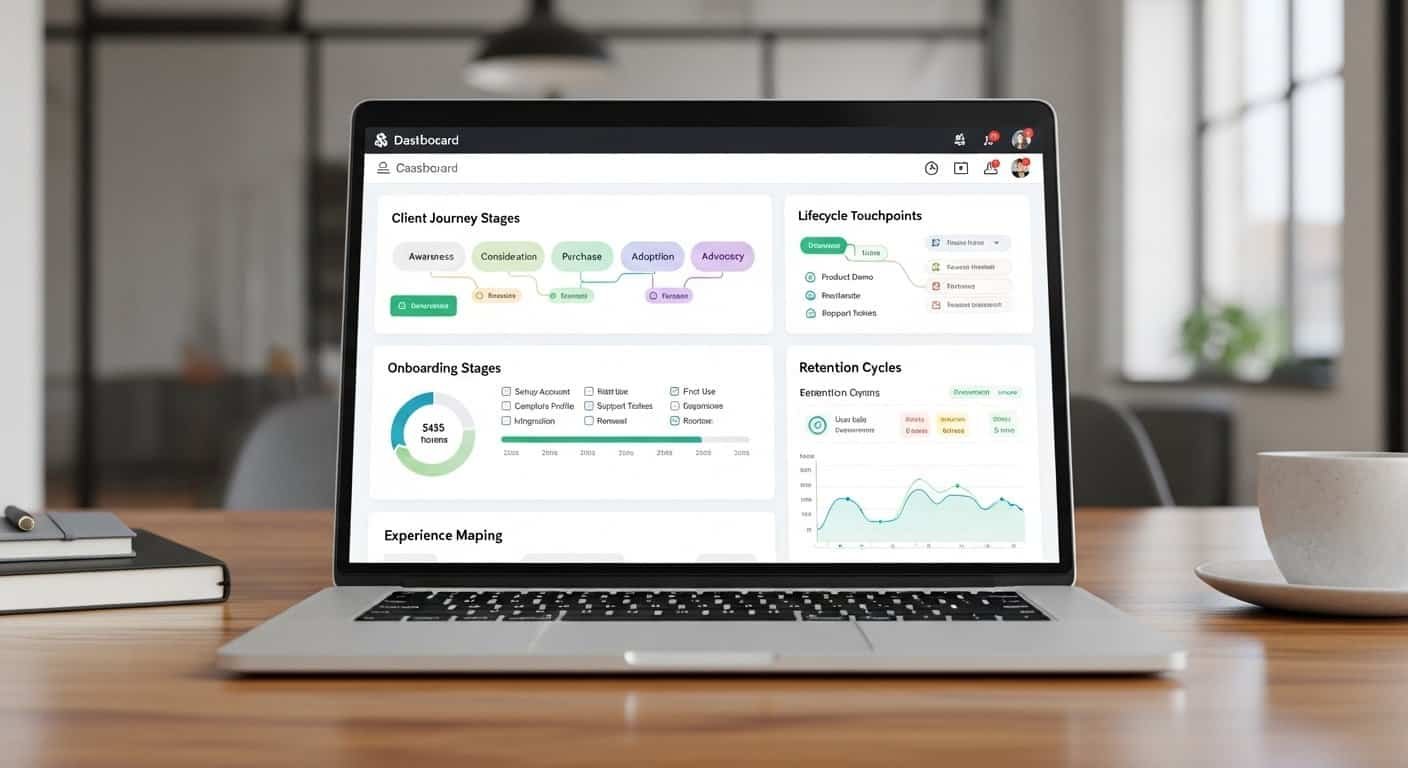
AI client journey mapping tools for consultants help consulting professionals visualize how clients interact with their services from the first interaction through long-term engagement. These platforms allow consultants to map onboarding stages, identify key touchpoints, understand retention cycles, and improve the overall client experience.
In consulting businesses, client relationships rarely follow a single interaction. Instead, they evolve through multiple stages that include discovery conversations, onboarding processes, program participation, and ongoing engagement. Without structured systems, understanding how clients move through these stages can become difficult.
When consultants rely on fragmented notes or informal tracking methods, identifying important moments within the client lifecycle becomes challenging. This lack of visibility can lead to inconsistent experiences, missed opportunities to strengthen relationships, and difficulty improving retention.
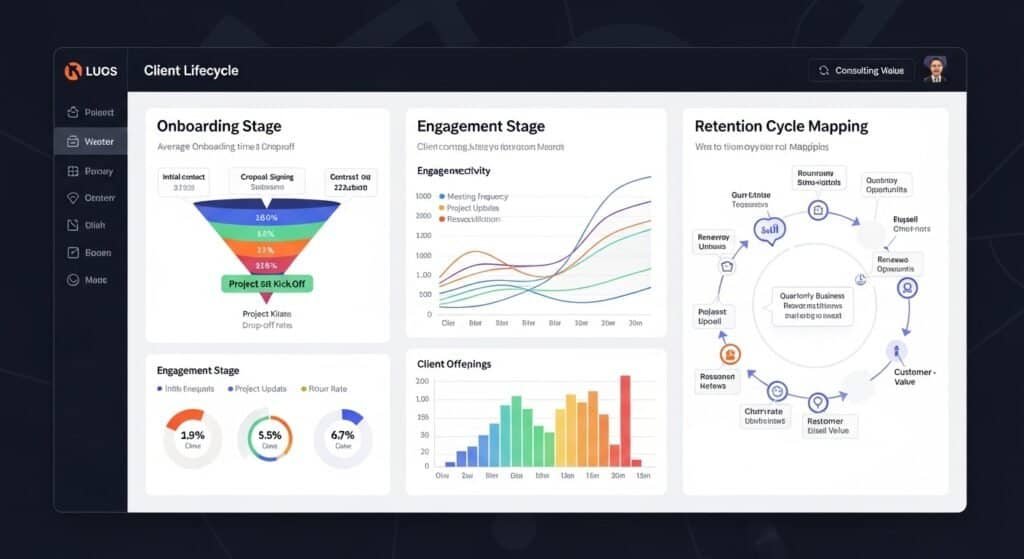
AI-powered journey mapping platforms address this challenge by visualizing the entire client lifecycle. These tools allow consultants to map each stage of the client experience, monitor engagement patterns, and design automation workflows that support long-term client relationships.
Businesses exploring broader consulting technology ecosystems can also review AI tools for coaches and consultants to understand how journey mapping tools integrate with other digital systems used in consulting practices.
For consultants who want to design more structured client experiences, journey mapping tools provide the infrastructure required to analyze client interactions and optimize lifecycle management.
Core Features of This Software
AI client journey mapping tools for consultants include several core capabilities that help consulting businesses understand and improve client experiences.
Lifecycle Mapping
Lifecycle mapping allows consultants to visualize how clients move through different stages of engagement.
Typical lifecycle stages may include:
- discovery or initial contact
- onboarding and program enrollment
- active engagement with services
- ongoing relationship development
Mapping these stages helps consultants understand the overall structure of client interactions.
Lifecycle mapping provides visibility into how clients transition between stages and how these transitions affect engagement.
Touchpoint Identification
Touchpoints represent moments when clients interact with a consulting business.
Examples of touchpoints may include:
- discovery calls
- onboarding conversations
- coaching sessions
- educational resource interactions
Journey mapping tools allow consultants to identify and analyze these touchpoints.
Understanding touchpoints helps consultants recognize which interactions influence the client experience most strongly.
Experience Mapping
Experience mapping focuses on how clients perceive each stage of their journey.
Journey mapping tools allow consultants to document client experiences across different stages.
These insights help consultants evaluate whether the experience aligns with the intended service design.
Improving experience quality often leads to stronger client relationships and higher retention.
Retention Stage Tracking
Retention cycles represent how clients continue interacting with consulting services over time.
Journey mapping platforms help consultants analyze patterns that influence long-term engagement.
These insights allow consultants to refine services that support ongoing relationships with clients.
Journey-Based Automation
Automation workflows can be connected to journey stages.
For example, automation systems may trigger specific actions when clients reach certain stages in their journey.
Some organizations combine journey mapping tools with ai client segmentation tools for consultants to categorize clients according to lifecycle stage and engagement patterns.
These automation capabilities help consultants maintain consistent client experiences.
Advanced Capabilities Businesses Need
While core features provide basic journey mapping capabilities, advanced platforms offer additional features that support deeper analysis and optimization.
Behavioral Journey Analysis
Behavioral analysis helps consultants understand how clients interact with services across multiple touchpoints.
These insights may reveal patterns such as:
- stages where engagement increases
- stages where clients disengage
Understanding these patterns helps consultants improve journey design.
Journey Visualization Dashboards
Visualization dashboards present journey stages in graphical formats that make lifecycle structures easier to understand.
These dashboards allow consultants to view:
- lifecycle stages
- client movement across stages
- engagement patterns
Visual journey mapping improves clarity when managing complex client experiences.
Retention Pattern Analysis
Retention analysis focuses on understanding how long clients remain engaged with consulting services.
Journey mapping platforms allow consultants to analyze retention cycles and identify stages where engagement declines.
These insights help consultants refine their services to improve long-term client relationships.
Experience Optimization
Experience optimization tools allow consultants to identify opportunities for improving the client journey.
For example:
- improving onboarding interactions
- enhancing program participation experiences
- strengthening ongoing engagement
These improvements contribute to stronger client relationships.
Journey Data Insights
Journey mapping platforms also provide insights that help consultants analyze how clients interact with services.
Some consulting organizations combine journey mapping insights with ai coaching performance analytics software to evaluate coaching outcomes across different stages of the client lifecycle.
These combined insights allow consultants to refine both service delivery and client experience design.

Tool Comparison Table
| Tool | Best For | Key Features | Starting Price |
|---|---|---|---|
| Smaply | Visual journey mapping | lifecycle mapping, touchpoint analysis | ~$25/month |
| UXPressia | Experience mapping | journey visualization dashboards | ~$24/month |
| Miro | Collaborative mapping | journey design boards | ~$10/month |
| Lucidchart | Process visualization | lifecycle diagrams | ~$9/month |
| FigJam | Collaborative journey mapping | touchpoint visualization | ~$8/month |
These platforms provide infrastructure that allows consultants to visualize and analyze client journeys.

Best Tools for Each Feature
Different journey mapping tools specialize in different capabilities.
Understanding these strengths helps consultants select the most appropriate platform.
1. Best for Lifecycle Visualization — Smaply
Smaply focuses on visual journey mapping.
The platform allows consultants to create structured lifecycle diagrams that illustrate how clients move through different engagement stages.
Key Features
- lifecycle mapping tools
- touchpoint analysis
- journey visualization dashboards
Pros
- intuitive journey mapping interface
Cons
- advanced collaboration features may require higher plans
2. Best for Experience Mapping — UXPressia
UXPressia provides tools designed for analyzing customer experiences across multiple stages.
The platform allows consultants to visualize interactions and improve service design.
Key Features
- experience mapping dashboards
- lifecycle visualization tools
- collaboration features
Pros
- strong visualization capabilities
Cons
- may require initial setup
3. Best for Collaborative Mapping — Miro
Miro provides collaborative boards that allow teams to map client journeys visually.
Consultants can create diagrams that illustrate lifecycle stages and touchpoints.
Key Features
- collaborative journey boards
- visual mapping tools
- team collaboration features
Pros
- flexible design interface
Cons
- less specialized for consulting workflows
4. Best for Structured Diagrams — Lucidchart
Lucidchart provides diagramming tools that help consultants visualize processes and journeys.
Key Features
- lifecycle diagrams
- process visualization tools
- collaborative editing
Pros
- powerful diagramming capabilities
Cons
- less specialized for client lifecycle mapping
5. Best for Simple Journey Design — FigJam
FigJam offers simple collaborative whiteboards that allow consultants to map client journeys.
Key Features
- touchpoint visualization
- collaborative mapping tools
- simple diagramming features
Pros
- easy to use
Cons
- limited advanced features
Integration Capabilities
AI client journey mapping tools often integrate with other systems used in consulting businesses.
Common integrations include:
- CRM systems
- communication platforms
- coaching management tools
- project management systems
Integrations allow journey mapping insights to influence operational workflows.
For example, lifecycle stages identified within journey maps may trigger automation workflows that support client onboarding or ongoing engagement.
These integrations help consultants maintain structured client experiences.

Pricing Structure
Pricing for AI client journey mapping tools for consultants varies depending on platform capabilities.
Entry-Level Platforms
Basic journey mapping tools typically cost $8–$20 per month.
These tools provide simple diagramming and visualization capabilities.
Mid-Tier Platforms
More advanced journey mapping platforms typically range between $20–$50 per month.
These systems provide lifecycle analysis and collaborative features.
Advanced Platforms
Professional experience mapping platforms may cost $50 or more per month, depending on feature sets and collaboration capabilities.
Choosing the right platform depends on how deeply consultants want to analyze client journeys.
Decision Guidance
Selecting the right AI client journey mapping tools for consultants requires evaluating several factors.
Journey Complexity
Consultants managing complex client journeys benefit from tools that support detailed lifecycle visualization.
Collaboration Needs
Teams working together on journey design should choose platforms that support collaborative editing.
Visualization Capabilities
Clear visual mapping improves understanding of complex client journeys.
Platforms with strong visualization tools often provide better insights.
Integration Options
Journey mapping platforms should integrate with other tools used within consulting businesses.
Integration capabilities help ensure that journey insights influence operational workflows.
Final Thoughts
AI client journey mapping tools for consultants provide structured systems that help visualize and optimize client experiences.
Without journey mapping systems, consultants may struggle to understand how clients interact with their services across multiple stages. Journey mapping platforms provide visibility into lifecycle stages, touchpoints, and engagement patterns.
By analyzing these elements, consultants can refine onboarding processes, strengthen retention cycles, and design more effective client experiences.
For consulting businesses seeking to scale while maintaining consistent service delivery, journey mapping tools provide the infrastructure required to manage complex client relationships effectively.
FAQ
1. What are AI client journey mapping tools for consultants?
AI client journey mapping tools for consultants help visualize the entire client lifecycle, including onboarding stages, interaction touchpoints, and long-term engagement patterns.
2. Why do consultants use journey mapping software?
Journey mapping software allows consultants to understand how clients move through different stages of the consulting experience and identify opportunities to improve engagement.
3. What features should client journey mapping tools include?
Key features typically include lifecycle visualization, touchpoint mapping, experience tracking, retention stage analysis, and journey-based automation capabilities.
4. How do journey mapping tools improve client experience?
By visualizing client interactions across different stages, consultants can identify friction points and improve service delivery throughout the consulting lifecycle.
5. Can journey mapping tools support consulting business growth?
Yes. Structured journey mapping helps consultants design better client experiences, improve retention, and maintain consistency as consulting businesses scale.
Disclaimer
The information provided in this article is for educational and informational purposes only. While we aim to keep content accurate and up to date, software features and availability may change over time. Some links on this page may be affiliate links, meaning we may earn a commission if you purchase through them at no additional cost to you. Always evaluate tools based on your specific business needs before making a decision.