5 Powerful AI Online Program Management Software
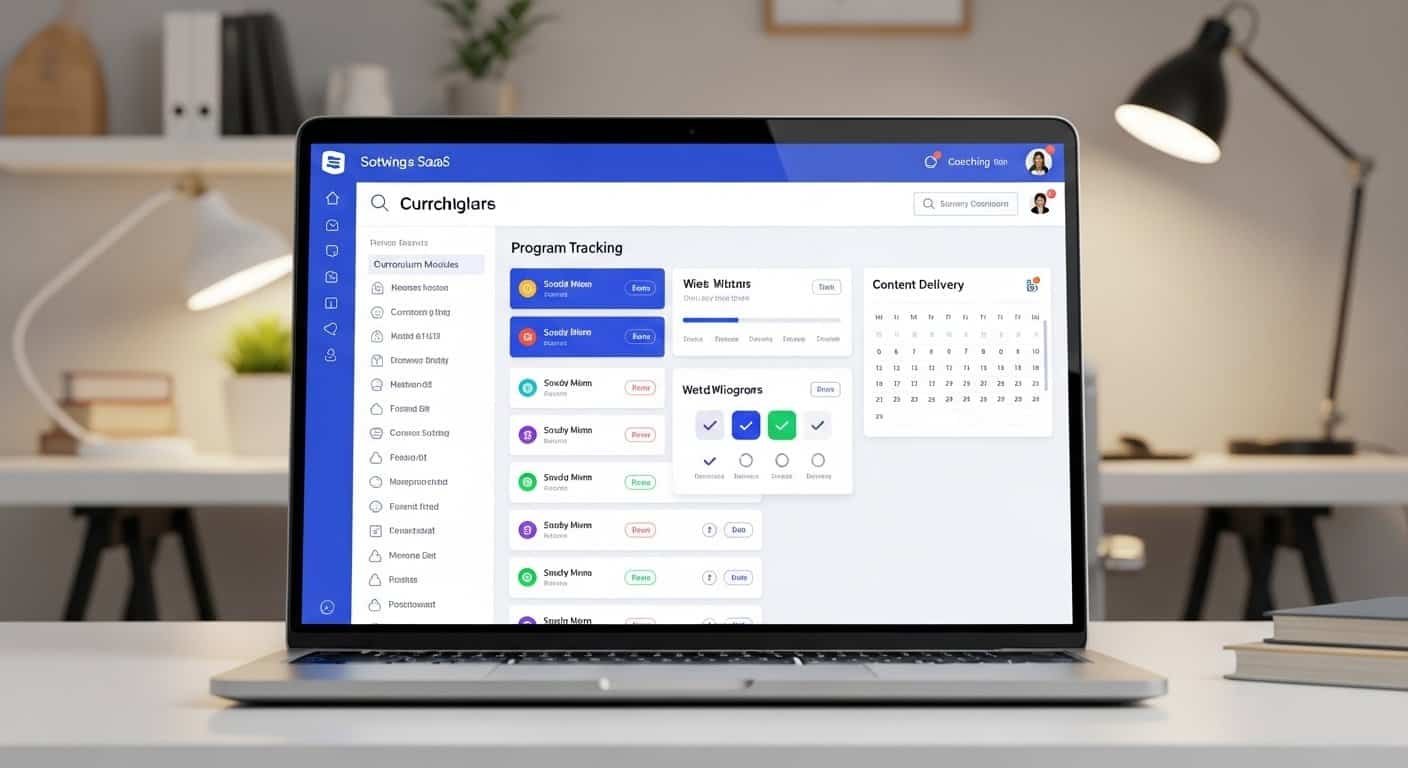
AI online program management software helps coaching businesses manage structured programs, organize curriculum content, track participant progress, and automate the delivery of coaching materials.
As coaching businesses expand their digital offerings, managing structured programs becomes increasingly complex. Coaches often deliver multi-week programs that include educational materials, structured milestones, and participant progress tracking. When these programs are managed manually, it becomes difficult to maintain organization across multiple participants.
Without a dedicated program management system, coaches often struggle with curriculum organization, tracking client progress, and delivering program content consistently. Participants may receive materials at inconsistent times, while coaches may lose visibility into program milestones.
AI-powered program management platforms solve these challenges by providing structured systems that organize program content, track participant progress, and automate content delivery schedules.
Businesses exploring broader coaching technology ecosystems can also review AI tools for coaches and consultants to understand how program management software fits into modern coaching infrastructure.
For coaching businesses delivering structured programs at scale, these platforms provide the operational structure needed to manage curriculum, track progress, and maintain consistent program delivery.
Core Features of This Software
AI online program management software provides several foundational capabilities that allow coaches to organize and deliver structured programs effectively.
Curriculum Management
Curriculum management is one of the most important features of program management platforms.
Coaches often deliver programs that include structured lessons, weekly materials, and guided activities. Curriculum organization tools allow coaches to structure these materials into a clear learning path.
Curriculum management systems typically allow coaches to:
- organize program modules
- structure lessons in sequence
- manage content across multiple cohorts
These features ensure that program participants follow a clear educational progression.
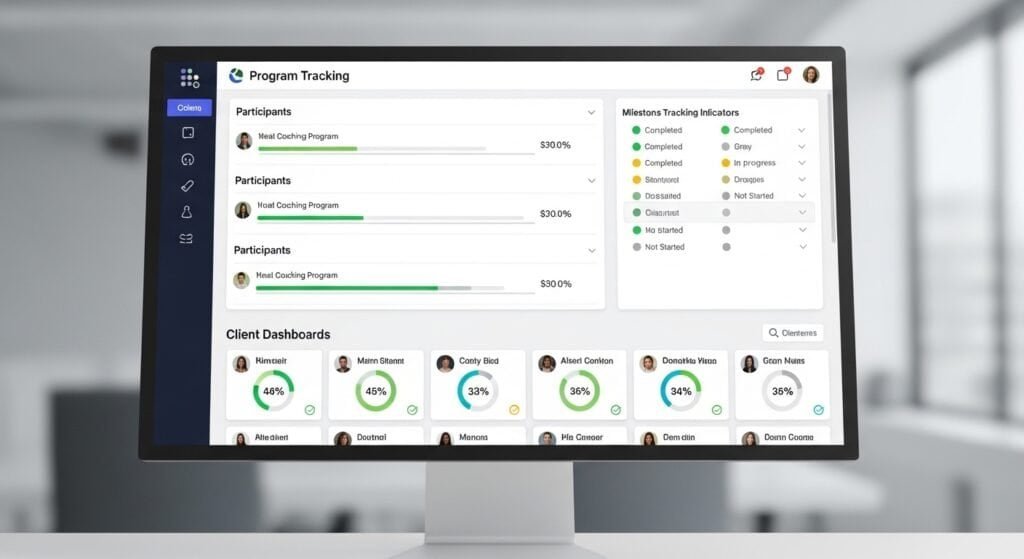
Program Tracking
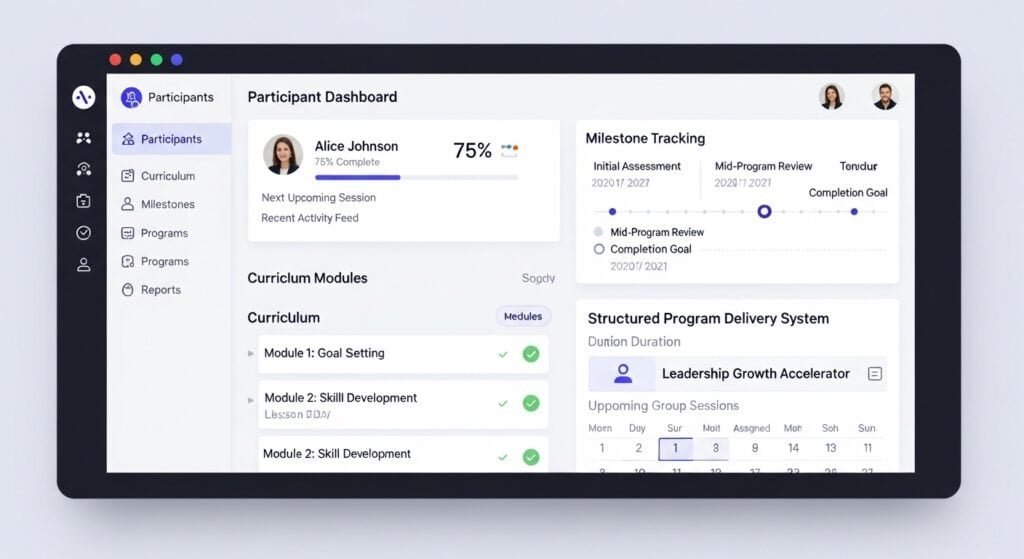
Program tracking allows coaches to monitor how participants progress through a structured coaching program.
Instead of manually reviewing participant activity, program tracking systems provide a centralized dashboard that displays progress across multiple participants.
Program tracking capabilities help coaches:
- monitor participant engagement
- track lesson completion
- identify participants who require additional support
These insights allow coaches to maintain visibility across their programs.
Client Progress Dashboards
Client dashboards provide participants with a clear overview of their program journey.
Participants can track their progress, review completed lessons, and access upcoming content through these dashboards.
Client dashboards improve the participant experience by providing transparency into program milestones.
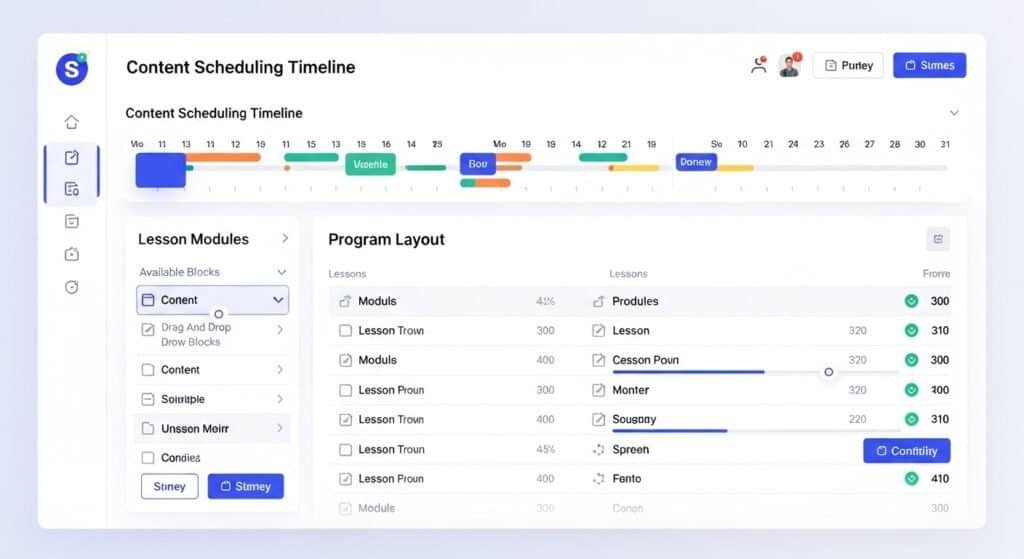
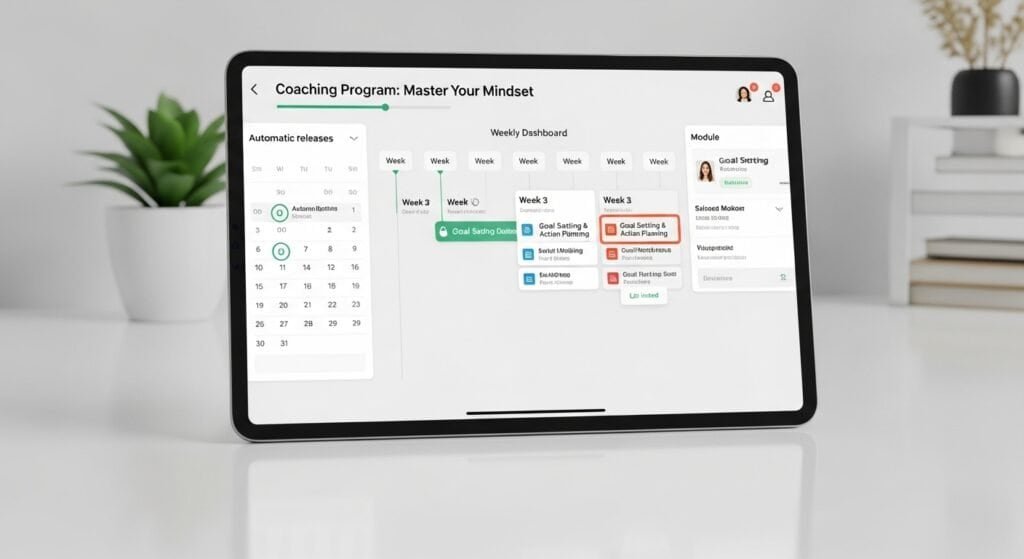
Content Scheduling
Content scheduling allows coaches to release materials according to a structured timeline.
Instead of giving participants access to the entire program immediately, coaches can schedule content releases over time.
For example:
- week 1 content released on program start
- week 2 content released after seven days
- week 3 content released after fourteen days
This structured delivery ensures that participants progress through the program in an organized manner.
Milestone Tracking
Many coaching programs include milestones that participants must reach during the program.
Milestone tracking allows coaches to monitor participant progress toward these goals.
Milestones may include:
- completing key lessons
- submitting assignments
- attending specific program sessions
Tracking milestones ensures participants stay on track throughout the program.
Advanced Capabilities Businesses Need
While basic program management tools provide essential features, more advanced platforms offer additional capabilities that help coaching businesses scale their operations.
Automation for Program Delivery
Automation systems allow program content to be delivered automatically without manual intervention.
When participants enroll in a program, automation triggers can release content, update participant dashboards, and activate milestone tracking.
This automation ensures that program delivery remains consistent.
Cohort-Based Program Management
Many coaching businesses operate cohort-based programs where groups of participants move through the program together.
Cohort management features allow coaches to organize participants into structured groups and track progress across cohorts.
Some coaching businesses combine program management systems with ai group coaching management tools to manage collaborative group programs.
Scalable Program Delivery
Scalability is a key advantage of digital program management systems.
Instead of manually coordinating program delivery, coaches can manage hundreds of participants through automated systems.
Scalable program delivery systems allow coaching businesses to grow without significantly increasing administrative workload.
Content Version Control
As programs evolve, coaches often update curriculum materials.
Version control systems allow coaches to update program content without disrupting existing participants.
New cohorts receive updated curriculum versions while current participants continue progressing through their existing content.
Tool Comparison Table
| Tool | Best For | Key Features | Starting Price |
|---|---|---|---|
| Kajabi | Structured coaching programs | curriculum organization, program dashboards | ~$119/month |
| LearnWorlds | Interactive learning programs | milestone tracking, content scheduling | ~$29/month |
| Thinkific | Program delivery platforms | curriculum tools, participant dashboards | ~$49/month |
| Podia | Coaching programs and courses | content scheduling, program tracking | ~$39/month |
| TrainerCentral | Professional coaching programs | curriculum management, client dashboards | ~$49/month |
These platforms help coaching businesses manage structured programs efficiently.
Best Tools for Each Feature
Different platforms excel at different aspects of program management.
1. Best for Curriculum Organization
Kajabi provides comprehensive curriculum organization tools that allow coaches to structure programs with multiple modules and lessons.
Its curriculum builder simplifies the process of organizing coaching content.
2. Best for Program Tracking
LearnWorlds offers advanced program tracking features that allow coaches to monitor participant progress across multiple lessons and milestones.
This platform is particularly useful for coaches who want detailed progress insights.
3. Best for Client Dashboards
Thinkific provides structured participant dashboards that allow clients to track progress and access program materials easily.
Client dashboards improve the learning experience for program participants.
4. Best for Content Scheduling
Podia offers flexible content scheduling features that allow coaches to release lessons gradually.
Content scheduling ensures participants receive materials at the correct stage of the program.
5. Best for Coaching Program Delivery
TrainerCentral provides structured systems designed specifically for coaching businesses.
The platform combines curriculum management with client progress tracking.
Some businesses also combine program management tools with ai digital course analytics software to analyze participant engagement across programs.
Integration Capabilities
AI online program management software often integrates with other tools used in coaching businesses.
Common integrations include:
- payment platforms
- communication tools
- scheduling systems
- community platforms
Integrations allow coaching businesses to connect program management platforms with their broader operational systems.
For example, program enrollment may automatically trigger access to program materials and activate content scheduling workflows.
These integrations simplify program operations and reduce administrative complexity.
Pricing Structure
Pricing for AI online program management software varies depending on features and platform capabilities.
Entry-Level Platforms
Basic program management tools typically cost between $30 and $50 per month.
These platforms provide essential curriculum management and content scheduling features.
Mid-Tier Platforms
Mid-tier platforms typically range between $50 and $100 per month.
These platforms include advanced automation features and enhanced participant dashboards.
Advanced Platforms
Enterprise-level platforms designed for large-scale coaching programs may cost $100 or more per month, depending on participant capacity and feature sets.
Choosing the right platform depends on the complexity of the coaching program and the number of participants.
Decision Guidance
Selecting the right AI online program management software requires evaluating several key factors.
Program Structure
Coaches should consider how their programs are structured.
Programs with detailed curricula and milestones require platforms that support advanced curriculum organization.
Participant Volume
Coaches managing larger numbers of participants should prioritize platforms with scalable delivery systems.
Scalable platforms allow businesses to grow without increasing operational complexity.
Content Delivery Strategy
The platform should support structured content release schedules that align with the program timeline.
Content scheduling ensures participants receive materials consistently.
Participant Experience
Client dashboards and progress tracking features improve the participant experience.
Clear progress tracking helps participants remain engaged with the program.
Final Thoughts
AI online program management software plays an important role in helping coaching businesses deliver structured digital programs efficiently.
Manual program management quickly becomes difficult as coaching businesses grow. Automation tools provide the structure required to organize curriculum, track participant progress, and deliver program content consistently.
By implementing structured program management systems, coaches can scale their digital programs while maintaining organized program delivery and clear participant progress tracking.
For coaching businesses delivering structured programs to multiple participants, adopting program management software is an essential step toward building scalable coaching operations.
FAQ
1. What is AI online program management software?
AI online program management software helps coaches organize structured programs, manage curriculum, track participant progress, and automate content delivery.
2. Why do coaching businesses need program management software?
Structured programs often include multiple lessons and milestones. Program management tools help coaches deliver content consistently and monitor participant progress.
3. Can program management software track client progress?
Yes. Most platforms provide dashboards that track lesson completion, milestone achievements, and overall program progress.
4. How does content scheduling work in coaching programs?
Content scheduling allows coaches to release program materials gradually based on a predefined timeline, ensuring participants progress through the program step by step.
5. What features should coaches look for in program management software?
Key features include curriculum management, milestone tracking, content scheduling, participant dashboards, and program tracking tools.
Disclaimer
The information provided in this article is for educational and informational purposes only. While we aim to keep content accurate and up to date, software features and availability may change over time. Some links on this page may be affiliate links, meaning we may earn a commission if you purchase through them at no additional cost to you. Always evaluate tools based on your specific business needs before making a decision.