5 Powerful AI Email Nurture Automation for Coaches
AI email nurture automation for coaches helps coaching businesses automate lifecycle communication, deliver structured email sequences, and maintain consistent engagement with clients throughout the coaching journey. Instead of manually sending follow-ups or reminders, coaches can build automated workflows that guide clients through onboarding, engagement, retention, and upsell stages.
Email communication plays an essential role in coaching businesses. Coaches often need to maintain contact with clients across multiple stages of the client lifecycle. These stages may include onboarding new clients, supporting ongoing coaching programs, maintaining engagement after sessions, and offering new services when appropriate.
However, managing these communications manually becomes increasingly difficult as coaching businesses grow. Coaches often work with multiple clients simultaneously, and sending personalized emails at every stage of the client journey requires significant time and effort.
When nurture communication is not structured properly, several operational problems often appear:
- new clients feel confused during onboarding
- important program information is missed
- engagement declines after coaching sessions
- renewal opportunities are overlooked
Over time, inconsistent communication weakens the overall client experience.
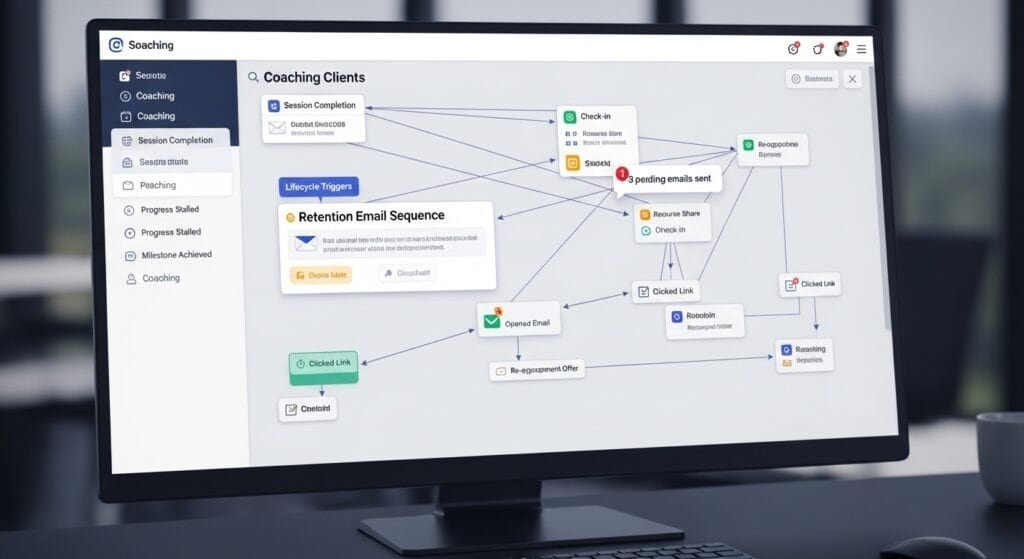
AI-powered email nurture automation systems solve this challenge by creating structured email sequences that deliver the right messages at the right time. These systems automatically send emails triggered by client actions or lifecycle stages, ensuring consistent communication throughout the coaching relationship.
Many coaching businesses combine nurture automation tools with other systems found within AI tools for coaches and consultants, including onboarding software, client management tools, and feedback platforms.
For coaches seeking to maintain consistent communication while scaling their business, nurture automation provides an essential operational solution.
The Operational Challenge
Managing client communication across multiple coaching engagements can quickly become overwhelming. While coaching businesses often start with a small number of clients, growth eventually creates communication challenges.
Without automation systems, coaches must manually track each client’s journey and determine which emails should be sent at different stages.
Several operational challenges commonly appear.
Inconsistent Client Onboarding
Onboarding is one of the most critical stages in the coaching journey. New clients often require guidance on how to begin their program.
Typical onboarding communication may include:
- welcome messages
- program instructions
- scheduling guidance
- resource access
When these messages are not delivered consistently, clients may feel uncertain about the next steps.
Automation ensures onboarding emails are delivered immediately after a client enrolls in a coaching program.
Declining Client Engagement
Client engagement often decreases when communication becomes inconsistent.
Without structured follow-ups, clients may gradually lose motivation or forget about available resources.
Regular communication helps maintain engagement throughout the coaching program.
Lifecycle email sequences ensure clients receive relevant information and reminders during their journey.
Missed Opportunities for Retention
Retention plays a major role in long-term coaching success. Clients who complete a program may still benefit from continued engagement through advanced programs or ongoing coaching relationships.
However, without structured communication systems, these opportunities may be missed.
Automated nurture sequences help maintain communication with clients even after programs end.
Lack of Lifecycle Communication
Coaching businesses often communicate with clients at different stages of their journey.
These stages typically include:
- onboarding
- active coaching engagement
- program completion
- ongoing relationship maintenance
Without automation systems, managing lifecycle communication becomes difficult.
Automation workflows allow coaches to structure communication for each stage of the client lifecycle.
Manual Communication Workload
Manually managing email communication consumes valuable time that coaches could otherwise spend delivering services.
Automation reduces administrative workload by scheduling emails automatically.
This allows coaches to focus on coaching rather than managing communication.
How This Software Solves It
AI email nurture automation for coaches addresses these challenges by automating structured email communication across the entire coaching lifecycle.
Automation platforms allow coaches to design workflows that deliver emails based on triggers such as:
- program enrollment
- session completion
- milestone achievements
- client inactivity
These triggers ensure communication remains timely and relevant.
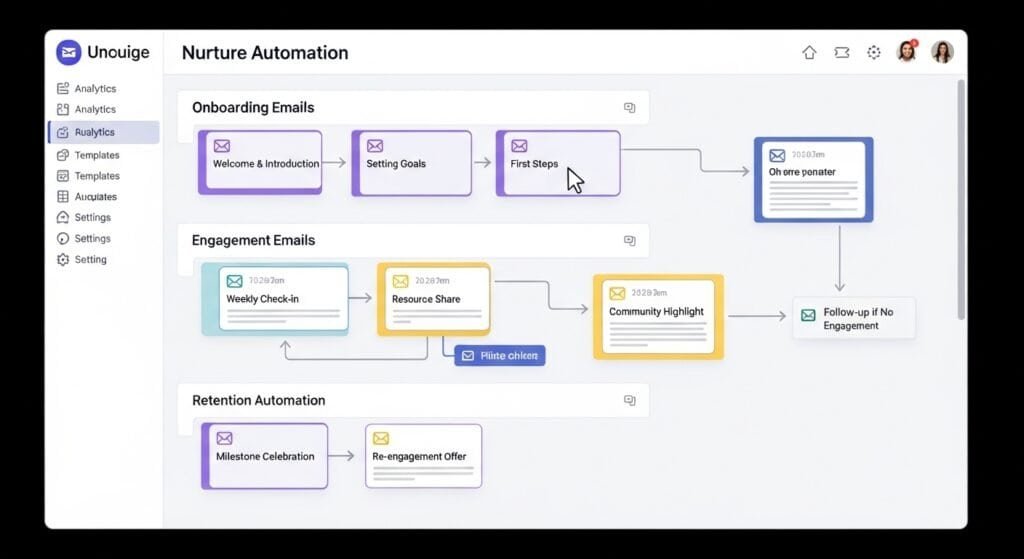
Automated Onboarding Sequences
Onboarding sequences welcome new clients and guide them through the initial stages of a coaching program.
Typical onboarding emails may include:
- welcome messages
- program overview
- scheduling instructions
- resource access details
Automation ensures these emails are delivered immediately after enrollment.
Lifecycle Engagement Emails
Lifecycle emails maintain engagement throughout the coaching journey.
These emails may include:
- reminders about upcoming sessions
- motivational messages
- educational resources
- coaching tips
Lifecycle automation ensures clients remain engaged during the entire program.
Retention Communication
Retention emails help maintain communication with clients after a coaching program ends.
These messages may include:
- follow-up check-ins
- additional resources
- invitations to advanced programs
Retention automation helps coaches maintain long-term relationships with clients.
Some coaches combine retention sequences with systems discussed in ai retention tools for consultants to strengthen client relationships over time.
Upsell Email Sequences
Upsell sequences introduce additional coaching opportunities to existing clients.
For example, coaches may offer:
- advanced coaching programs
- specialized training modules
- ongoing advisory services
Automation ensures these opportunities are presented at appropriate moments.
Workflow-Based Communication
Automation workflows allow coaches to design email sequences triggered by client actions.
For example:
- when a client joins a program
- when a session is completed
- when a program milestone is reached
These triggers ensure communication remains personalized and relevant.
Core Capabilities
AI email nurture automation platforms provide several important capabilities that support lifecycle communication.
Email Sequence Automation
Automation platforms allow coaches to create structured email sequences.
Each sequence contains multiple emails delivered over a specific time period.
These sequences guide clients through different stages of the coaching journey.
Workflow Automation
Workflow builders allow coaches to create automation rules based on client behavior.
For example, workflows may trigger emails when clients complete onboarding steps.
Automation workflows help maintain consistent communication.
Lifecycle Segmentation
Segmentation features allow coaches to organize clients according to lifecycle stages.
Different email sequences can be delivered to clients at different stages of their journey.
This ensures communication remains relevant.
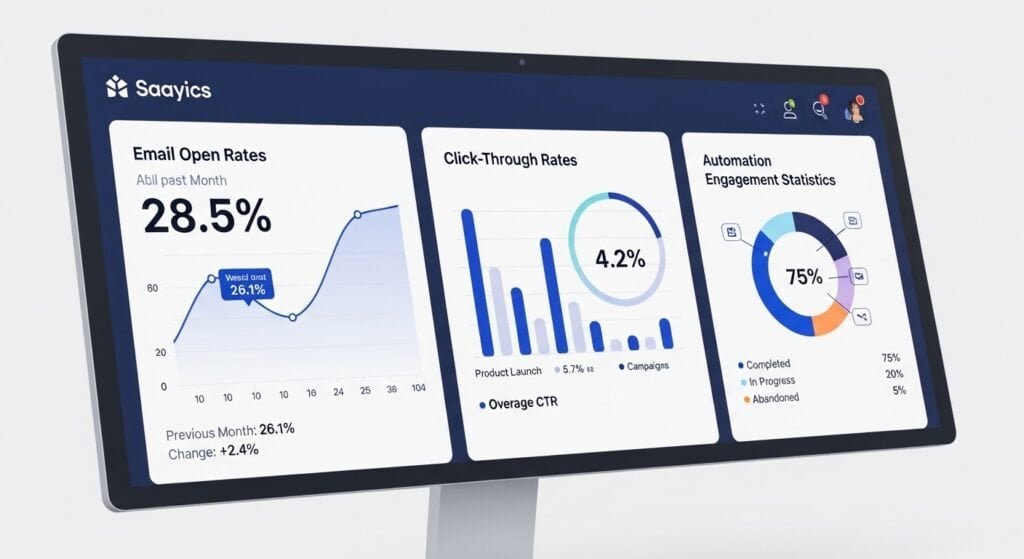
Engagement Analytics
Analytics dashboards help coaches monitor how clients interact with nurture emails.
Metrics may include:
- email open rates
- click-through activity
- engagement trends
These insights help coaches refine communication strategies.
Personalization Capabilities
Many automation tools allow coaches to personalize emails using client data.
Personalized emails often improve engagement because clients feel the communication is more relevant.
Top Tools
Several platforms provide automation capabilities that support AI email nurture automation for coaches. Each tool offers different strengths depending on how a coaching business manages lifecycle communication and automation workflows.
1. ActiveCampaign
ActiveCampaign is one of the most widely used automation platforms for building advanced nurture sequences.
The platform allows coaches to create automated email workflows triggered by client actions or lifecycle stages.
Key Features
- advanced automation workflows
- behavioral email triggers
- lifecycle segmentation
- engagement analytics
Pros
- powerful automation engine
- highly customizable workflows
Cons
- requires setup time for complex automation
ActiveCampaign is particularly useful for coaching businesses that want to design detailed nurture workflows across multiple lifecycle stages.
2. ConvertKit
ConvertKit focuses on creators and service professionals who need simple but effective email automation.
The platform allows coaches to create nurture sequences that deliver structured email communication over time.
Key Features
- automated email sequences
- subscriber tagging
- automation workflows
- engagement tracking
Pros
- intuitive user interface
- simple automation setup
Cons
- fewer advanced automation options than some enterprise tools
ConvertKit is often used by coaches who want straightforward nurture automation without complex configuration.
3. MailerLite
MailerLite provides affordable automation tools that help coaches maintain consistent email communication.
The platform includes automation workflows designed for lifecycle messaging.
Key Features
- lifecycle email sequences
- automation workflows
- engagement analytics
Pros
- affordable pricing
- easy-to-use automation builder
Cons
- limited advanced automation capabilities
MailerLite is well suited for independent coaches who want simple nurture automation.
4. HubSpot Marketing Hub
HubSpot provides automation tools designed to support lifecycle communication across the client journey.
Coaches can create nurture sequences triggered by specific lifecycle stages.
Key Features
- lifecycle automation workflows
- engagement tracking dashboards
- CRM integration
Pros
- strong ecosystem integration
- scalable automation capabilities
Cons
- advanced features require paid plans
HubSpot is particularly useful for coaching businesses that already use CRM infrastructure.
5. Drip
Drip offers behavior-based automation that adapts email communication according to client activity.
This allows coaches to create highly personalized nurture campaigns.
Key Features
- behavior-triggered emails
- lifecycle automation workflows
- engagement analytics
Pros
- powerful behavioral automation
Cons
- more complex setup compared to simpler tools
Drip is often used by coaching businesses that want dynamic automation based on client behavior.
Implementation Considerations
Before implementing AI email nurture automation for coaches, several important factors should be considered to ensure automation workflows operate effectively.
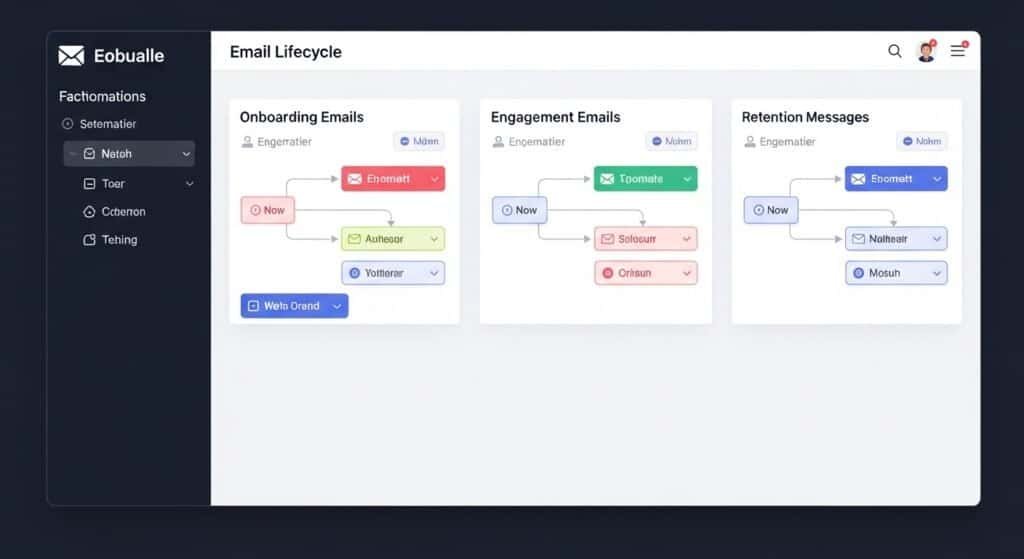
Define Lifecycle Stages
Automation works best when communication is organized around clear lifecycle stages.
Typical lifecycle stages for coaching businesses include:
- onboarding stage
- active coaching stage
- program completion stage
- retention stage
Defining these stages helps coaches design appropriate nurture sequences.
Create Structured Email Sequences
Each lifecycle stage should include a structured sequence of emails.
For example:
Onboarding sequence
- welcome message
- program instructions
- scheduling guidance
Engagement sequence
- coaching reminders
- educational resources
- motivational content
Structured sequences ensure clients receive consistent communication.
Maintain Message Relevance
Automation should deliver relevant content based on client needs and engagement stage.
Sending irrelevant emails can reduce engagement.
Segmentation features help ensure clients receive appropriate communication.
Monitor Engagement Metrics
Automation platforms provide analytics that help coaches monitor engagement.
Important metrics include:
- open rates
- click-through rates
- response activity
These insights help coaches refine nurture sequences.
Align Automation With Business Goals
Email nurture automation should support broader coaching objectives.
For example, automation may help support:
- onboarding efficiency
- long-term client engagement
- retention campaigns
Some coaches integrate nurture workflows with ai broadcast email tools for coaching launches when running promotional campaigns.
However, nurture automation focuses primarily on lifecycle communication rather than one-time broadcasts.
Pricing Expectations
Pricing for AI email nurture automation for coaches varies depending on platform capabilities and subscriber volume.
Understanding pricing tiers helps coaches select tools that match their business stage.
Entry-Level Platforms
Basic automation platforms typically cost between $10 and $30 per month.
These tools provide simple automation workflows and basic email sequences.
Entry-level platforms are often sufficient for independent coaches managing small client lists.
Mid-Tier Platforms
More advanced platforms generally cost between $30 and $100 per month.
These systems provide additional features such as:
- lifecycle segmentation
- behavioral automation
- analytics dashboards
Mid-tier platforms are often used by growing coaching businesses.
Advanced Platforms
Enterprise-level automation platforms may cost $100+ per month.
These systems support complex automation workflows and large subscriber databases.
Larger coaching organizations often require these advanced capabilities.
Final Thoughts
AI email nurture automation for coaches provides a structured system for maintaining consistent communication with clients across the entire coaching lifecycle.
Without automation systems, managing email communication becomes time-consuming and inconsistent. Clients may miss important information, engagement may decline, and opportunities for retention may be overlooked.
Nurture automation solves this problem by delivering structured email sequences that guide clients through onboarding, engagement, retention, and upsell stages.
These systems help coaching businesses maintain consistent relationships with clients while reducing administrative workload.
For coaches seeking to scale their businesses while maintaining strong client communication, implementing email nurture automation is an important step toward building sustainable coaching operations.
FAQ
1. What is AI email nurture automation for coaches?
AI email nurture automation allows coaches to create automated email sequences that guide clients through onboarding, engagement, and retention stages.
2. Why do coaching businesses use nurture automation?
Automation helps maintain consistent communication with clients without requiring manual email management.
3. What types of emails are included in nurture sequences?
Nurture sequences often include onboarding emails, engagement messages, retention communication, and upsell offers.
4. Can nurture automation improve coaching client retention?
Yes. Structured communication helps maintain engagement and strengthens long-term relationships with coaching clients.
5. What features should email nurture tools include?
Important features include automation workflows, lifecycle segmentation, engagement analytics, and personalized email sequences.
Disclaimer
The information provided in this article is for educational and informational purposes only. While we aim to keep content accurate and up to date, software features and availability may change over time. Some links on this page may be affiliate links, meaning we may earn a commission if you purchase through them at no additional cost to you. Always evaluate tools based on your specific business needs before making a decision.