6 Powerful AI Content Scheduling Tools for Coaches to Scale Consistency
AI content scheduling tools for coaches help automate publishing, manage content calendars, optimize post timing, and maintain consistent visibility without daily manual effort.
Most coaches understand that content consistency drives growth. Regular posting builds trust, improves visibility, and keeps the audience engaged. However, the execution layer is where most coaching businesses fail.
Content gets created, but not published on time. Posts are written but never scheduled. Calendars are planned but not followed. Publishing becomes reactive instead of structured.
This leads to:
- inconsistent posting
- missed publishing opportunities
- poor engagement timing
- scattered content calendars
- reduced audience growth
The issue is not content creation. The issue is content execution.
This is where ai content scheduling tools for coaches become operationally important.
These tools do not create content. They ensure that content gets published consistently, at the right time, and across the right platforms.
They act as the execution layer of a content system.
For a complete view of how scheduling fits into the broader ecosystem, refer to AI tools for coaches and consultants.
Business Workflow Overview
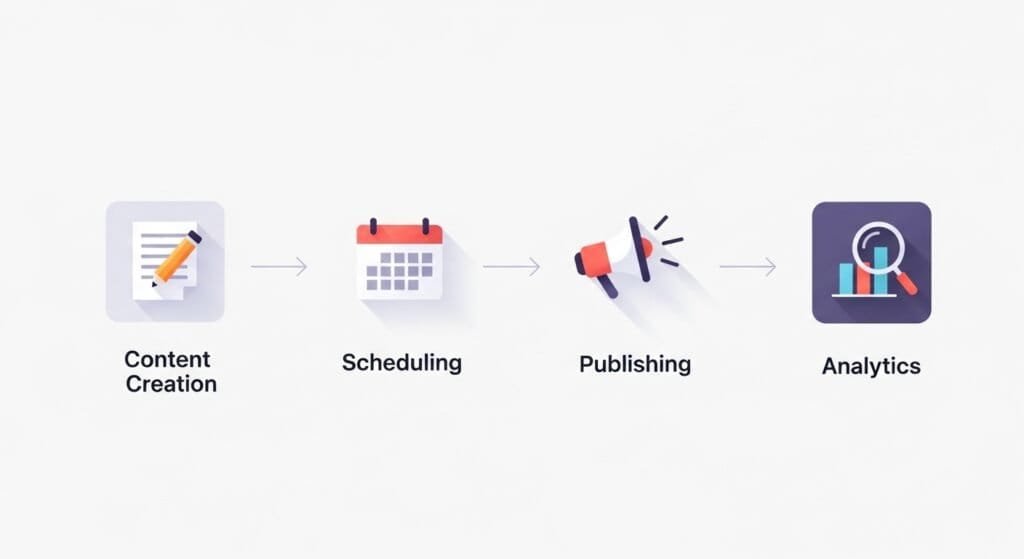
To understand the role of scheduling tools, you need to look at the full content workflow.
A typical content system includes:
- Idea generation
- Content creation
- Content repurposing
- Content scheduling
- Publishing
- Performance tracking
Most coaches focus heavily on step 1 and 2.
But step 4—scheduling—is where consistency is either maintained or lost.
Without a structured scheduling system:
- content is published irregularly
- posting depends on daily motivation
- timing is inconsistent
- audience engagement suffers
Scheduling tools convert content from random output into a predictable system.
They allow coaches to separate creation from publishing.
This is a key shift.
Instead of creating and posting at the same time, coaches can:
- create content in batches
- schedule it in advance
- automate publishing
- maintain consistency without daily effort
Where This Software Fits
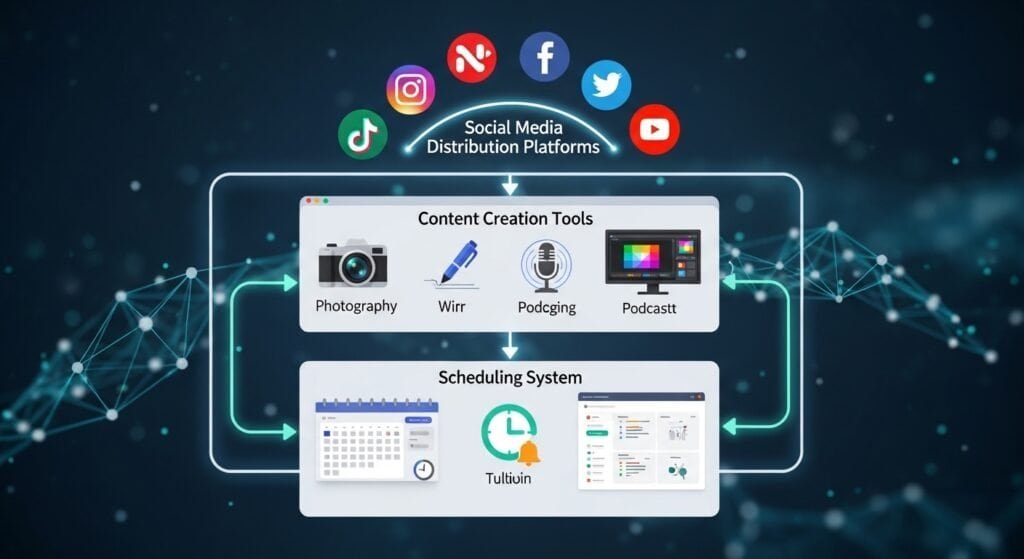
AI content scheduling tools for coaches sit between content creation and publishing.
They are not content generators.
They are not analytics dashboards.
They are execution tools.
Their role is to take completed content and ensure it is:
- organized in a content calendar
- scheduled at optimal times
- distributed across platforms
- published consistently
They act as a bridge between:
- content systems (creation + automation)
- distribution systems (social platforms)
For example:
- content is created using ai content automation tools for consultants
- then scheduled using content scheduling tools
- then distributed and amplified using ai social media automation for coaches
Without scheduling, the entire system breaks down.
Key Capabilities
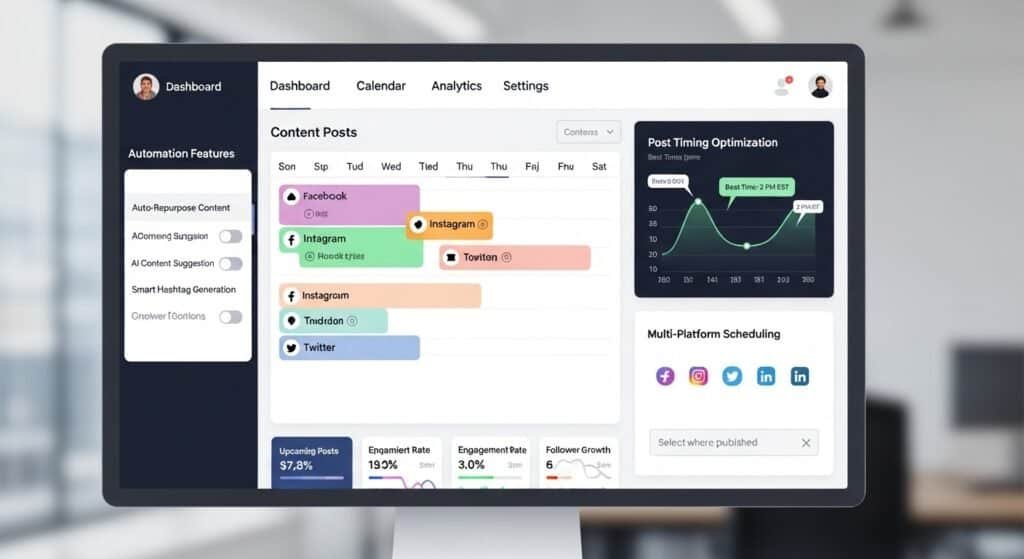
The effectiveness of scheduling tools depends on their core capabilities.
Content Calendar Management
A structured content calendar is the foundation.
Scheduling tools provide:
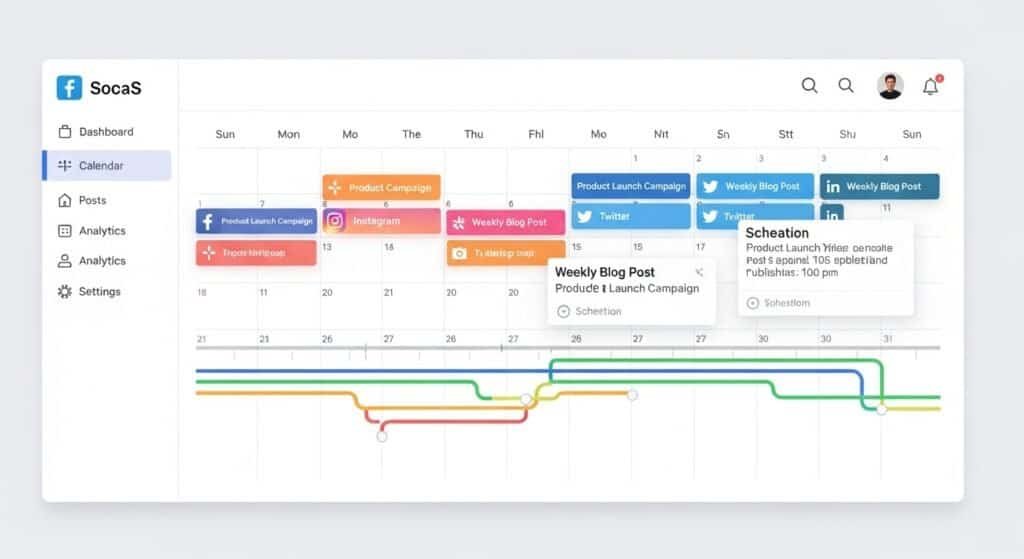
- visual calendars
- content timelines
- posting schedules
- platform-specific views
This helps coaches plan content in advance.
Automated Publishing
The primary function is automated publishing.
Once content is scheduled, the tool publishes it automatically.
This removes the need for manual posting.
Multi-Platform Scheduling
Most coaches operate across multiple platforms.
Scheduling tools allow content to be published on:
- X (Twitter)
- YouTube
This centralizes publishing.
Post Timing Optimization
Timing affects engagement.
AI scheduling tools analyze:
- audience activity
- engagement patterns
- historical performance
They recommend optimal posting times.
Engagement Tracking (Basic)
Some tools provide basic engagement insights such as:
- likes
- comments
- shares
- reach
This helps evaluate content performance at a basic level.
Content Queue Management
Content queues allow coaches to:
- preload content
- maintain publishing pipelines
- avoid gaps in posting
Recommended Tools
Different tools serve different types of users.
1. Buffer
Buffer is simple and effective.
It supports:
- content scheduling
- calendar planning
- multi-platform posting
Best for: beginners and solo coaches
2. Hootsuite
Hootsuite offers more advanced scheduling capabilities.
It includes:
- content calendar
- multi-platform scheduling
- engagement tracking
Best for: growing coaching businesses
3. Later
Later is strong for visual platforms.
It supports:
- Instagram scheduling
- visual content planning
- drag-and-drop calendar
Best for: content with strong visual focus
4. Publer
Publer focuses on automation and scheduling flexibility.
It supports:
- bulk scheduling
- post recycling
- queue management
Best for: coaches focused on consistency
5. SocialBee
SocialBee is designed for structured content categories.
It allows:
- category-based scheduling
- evergreen content recycling
- queue-based publishing
Best for: long-term content systems
6. Metricool
Metricool combines scheduling with basic analytics.
It helps with:
- scheduling
- performance tracking
- content planning
Best for: coaches who want scheduling + insights
Workflow Example
To understand the real value, consider a simple workflow.
Step 1: Content Creation
A coach creates:
- 1 blog post
- 5 social posts
- 2 short video scripts
Step 2: Content Repurposing
The blog is turned into:
- multiple social posts
- short captions
- content snippets
Step 3: Scheduling
Using a scheduling tool:
- posts are added to the calendar
- timing is optimized
- content is distributed across platforms
Step 4: Automated Publishing
Content is published automatically over days or weeks.
Step 5: Performance Review
Basic engagement metrics are reviewed.
This workflow allows one content session to generate multiple days of visibility.
Integration Possibilities
Scheduling tools are not standalone systems.
They work best when integrated into a broader workflow.
Content Automation Tools
Scheduling tools rely on content generated elsewhere.
For example:
- ai content automation tools for consultants create content
- scheduling tools distribute it
Social Media Automation Tools
Scheduling is often combined with automation tools.
For example:
- ai social media automation for coaches can handle engagement or amplification
Analytics Platforms
Some businesses integrate scheduling tools with analytics dashboards to track performance.
Content Storage Systems
Content is often stored in:
- Notion
- Google Docs
- Airtable
Scheduling tools pull from these systems.

Cost Considerations
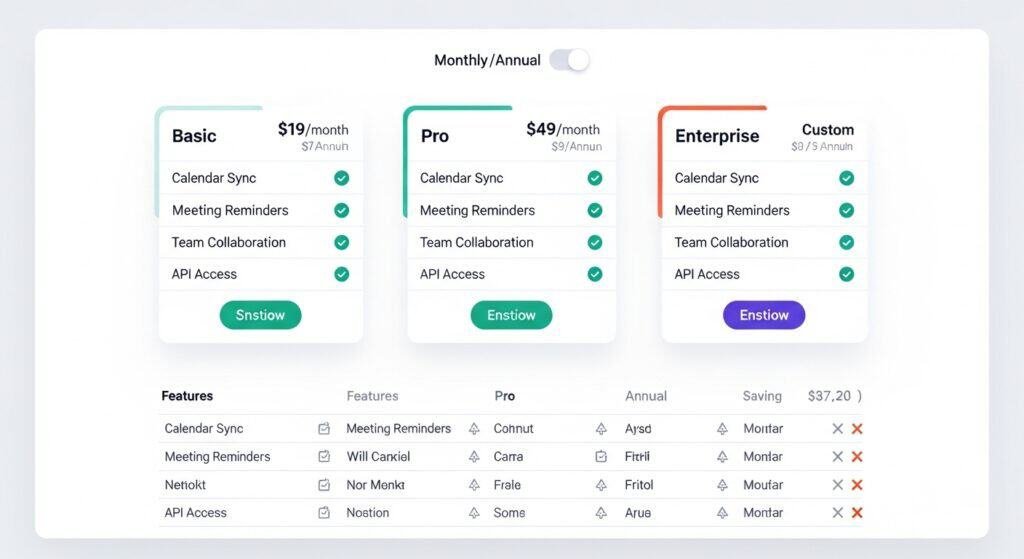
Pricing varies depending on features and scale.
Free Tools
Basic scheduling tools may offer free plans.
These are suitable for:
- solo coaches
- low posting frequency
Mid-Tier Plans
Paid plans typically range from:
$10 to $50 per month
These include:
- multi-platform scheduling
- calendar features
- queue management
Advanced Plans
More advanced tools may cost:
$50 to $200 per month
These include:
- analytics
- team collaboration
- advanced automation
Advanced Workflow Optimization with AI Content Scheduling Tools
Once basic scheduling is in place, the next level is optimization.
Most coaches stop at “schedule and publish.” That is not enough if the goal is growth.
The real leverage comes from how scheduling interacts with:
- content timing
- content type
- platform behavior
- audience activity
This is where ai content scheduling tools for coaches move from simple tools to strategic systems.
Timing Strategy vs Random Posting
Many coaches schedule content without thinking about timing logic.
They either:
- post at random times
- post when content is ready
- follow generic “best time” advice
This leads to inconsistent results.
AI scheduling tools solve this by analyzing:
- when the audience is most active
- when past posts performed best
- which time slots generate engagement
Instead of guessing, the system adjusts posting time based on data.
This improves:
- reach
- engagement
- visibility consistency
Content Type Scheduling
Not all content performs the same way.
For example:
- educational posts may perform better in the morning
- opinion posts may perform better in the evening
- short-form content may perform better on weekends
Advanced scheduling systems allow categorizing content and assigning different timing strategies.
This creates structure.
Instead of random publishing, the system becomes predictable.
Frequency Optimization
Posting too little reduces visibility.
Posting too much reduces engagement.
The right frequency depends on:
- platform
- audience size
- content quality
- consistency
AI scheduling tools help balance frequency by:
- spacing posts properly
- avoiding content overlap
- maintaining steady output
Scaling Content Consistency
Consistency is not about discipline alone. It is about removing friction.
Removing Daily Decision Fatigue
Without scheduling systems, coaches decide every day:
- what to post
- when to post
- where to post
This creates friction.
Scheduling tools eliminate this by:
- planning content in advance
- automating publishing
- reducing daily decisions
Building a Content Pipeline
A strong scheduling system creates a pipeline.
Instead of thinking in single posts, the business operates with:
- a queue of upcoming content
- a backlog of prepared posts
- a forward-looking calendar
This ensures there are no gaps.
Maintaining Long-Term Visibility
Visibility is cumulative.
If content is published consistently:
- audience familiarity increases
- engagement improves
- platform algorithms favor the account
Scheduling tools ensure that consistency is maintained over time.
Common Mistakes Coaches Make
Even with scheduling tools, many coaches fail to use them effectively.
Mistake 1: Scheduling Without Strategy
Some coaches treat scheduling tools as posting tools only.
They:
- upload content
- set random times
- forget about optimization
This removes structure.
Mistake 2: No Content Buffer
Many coaches schedule only a few posts at a time.
This creates risk.
If they stop creating content, publishing stops.
A better approach is to maintain a buffer of:
- 1–2 weeks of scheduled content
Mistake 3: Ignoring Performance Data
Scheduling tools often provide basic insights.
Many users ignore them.
This prevents improvement.
Mistake 4: Overloading Platforms
Posting too frequently without strategy can reduce engagement.
Scheduling tools should be used to balance output, not overload it.
Mistake 5: No Integration with Content Systems
Scheduling tools are only one part of the system.
If they are not connected to:
- content creation tools
- content storage systems
- repurposing workflows
the system remains fragmented.
Content Calendar Structuring Strategy
A structured calendar improves clarity.
Weekly Content Structure Example
A simple weekly structure could include:
- Monday: educational post
- Tuesday: insight or opinion
- Wednesday: short-form content
- Thursday: case study or example
- Friday: summary or recap
- Saturday: lighter content
- Sunday: optional or rest
This creates rhythm.
Monthly Planning
At a monthly level, content can be aligned with:
- themes
- campaigns
- offers
- launches
Scheduling tools help visualize this.
Evergreen vs Time-Sensitive Content
Content can be divided into:
- evergreen content (reusable)
- time-sensitive content
Scheduling tools allow:
- recycling evergreen content
- prioritizing time-sensitive posts
Integration with Broader Systems
To build a scalable system, scheduling tools must connect with other layers.
Integration with Content Automation
Content automation tools generate content.
Scheduling tools distribute it.
Without integration, content remains unused.
Integration with Social Automation
Scheduling handles publishing.
But engagement may require additional tools.
This is where ai social media automation for coaches becomes useful.
Integration with Content Repositories
Content should be stored centrally.
Scheduling tools can pull from:
- Notion
- Airtable
- Google Drive
This keeps the system organized.
Cost vs Value Analysis
Many coaches hesitate to pay for scheduling tools.
This is a short-term mindset.
Time Savings
Scheduling tools reduce:
- daily posting time
- manual work
- repeated actions
Consistency Value
Consistency leads to:
- better engagement
- audience growth
- improved reach
Opportunity Cost
Without scheduling:
- content is inconsistent
- visibility drops
- growth slows
The cost of inconsistency is higher than the cost of the tool.
When You Actually Need Scheduling Tools
Not every coach needs advanced tools immediately.
Early Stage
At the beginning:
- manual posting is acceptable
- focus is on content quality
Growth Stage
Once content volume increases:
- scheduling becomes necessary
- consistency becomes harder
Scaling Stage
At scale:
- scheduling is mandatory
- workflows must be structured
Final Recommendation
Most coaches underestimate how important execution systems are.
They focus on:
- content ideas
- content quality
- content strategy
But they ignore:
- content consistency
- publishing discipline
- workflow structure
That is a mistake.
AI content scheduling tools for coaches solve the execution problem.
They ensure that content:
- gets published consistently
- reaches the audience at the right time
- supports long-term visibility growth
Without scheduling, content remains inconsistent.
With scheduling, content becomes a system.
And systems are what scale businesses.
FAQ
1. What are AI content scheduling tools for coaches?
AI content scheduling tools for coaches automate social media publishing, manage content calendars, and optimize post timing for consistent visibility.
2. How do scheduling tools improve content consistency?
They allow coaches to schedule posts in advance, ensuring regular publishing without daily manual effort.
3. Can scheduling tools optimize posting times?
Yes. AI-based tools analyze engagement patterns to recommend the best times to publish content.
4. Are scheduling tools necessary for small coaching businesses?
Yes. Even small businesses benefit from consistent posting and structured content calendars.
5. What is the difference between content automation and scheduling tools?
Content automation tools create content, while scheduling tools handle publishing and timing.
Disclaimer
The information provided in this article is for educational and informational purposes only. While we aim to keep content accurate and up to date, software features and availability may change over time. Some links on this page may be affiliate links, meaning we may earn a commission if you purchase through them at no additional cost to you. Always evaluate tools based on your specific business needs before making a decision.