5 Powerful AI Survey Tools for Consultants
AI survey tools for consultants help consulting businesses design questionnaires, automate survey distribution, analyze client responses, and collect structured insights that support better decision-making. These platforms allow consultants to build surveys quickly, track responses in real time, and transform feedback data into actionable insights.
In consulting businesses, information plays a central role in guiding strategy. Consultants often rely on structured feedback to understand client needs, evaluate service effectiveness, and measure outcomes across different engagements. Without organized survey systems, collecting this information becomes inconsistent and difficult to analyze.
Many consultants attempt to gather insights through informal conversations, emails, or occasional questionnaires. While these methods can capture useful feedback, they rarely provide consistent data that can be analyzed across multiple clients or projects.
AI-powered survey platforms solve this challenge by providing structured systems for collecting, organizing, and analyzing responses. These tools allow consultants to distribute surveys automatically, track responses across different engagements, and evaluate patterns that support strategic decision-making.
Consultants building broader operational infrastructure often combine survey tools with systems listed in AI tools for coaches and consultants, which include onboarding automation, progress tracking, and feedback management platforms.
By integrating survey tools into consulting workflows, businesses can systematically gather insights that improve services and support long-term client relationships.
Business Workflow Overview
Survey tools are most effective when integrated into the overall workflow of consulting engagements. Rather than sending surveys randomly, consultants typically embed survey systems into specific stages of the client lifecycle.
A typical consulting workflow includes several phases:
- client discovery
- needs assessment
- project implementation
- program evaluation
Each phase presents opportunities to gather structured insights through surveys.
During the early stages of engagement, surveys may help consultants assess client needs and identify priorities. Later in the process, surveys can evaluate the effectiveness of consulting recommendations or coaching programs.
By embedding surveys into the consulting workflow, businesses gain consistent insights that support ongoing improvement.
AI survey tools for consultants help automate these processes, ensuring that surveys are distributed at the right time and responses are collected systematically.
Where This Software Fits
Survey platforms typically support several stages of the consulting process.
Understanding where survey tools fit within the workflow helps consultants use them more effectively.
Client Needs Assessment
At the beginning of a consulting engagement, surveys can be used to gather information about the client’s situation.
Consultants may use questionnaires to assess:
- business challenges
- organizational priorities
- operational constraints
- desired outcomes
This information helps consultants design strategies tailored to client needs.
Project Feedback Collection
During consulting projects, surveys allow consultants to gather feedback on how the engagement is progressing.
Clients may provide insights about:
- communication effectiveness
- project clarity
- perceived value of recommendations
These responses help consultants adjust their approach when necessary.
Program Evaluations
At the conclusion of consulting programs, surveys allow consultants to evaluate results and measure client satisfaction.
Program evaluation surveys often include questions related to:
- overall program effectiveness
- learning outcomes
- implementation challenges
These insights help consultants refine future engagements.
Client Assessments
Consultants often use surveys to conduct structured assessments.
These assessments may evaluate topics such as:
- organizational readiness
- leadership effectiveness
- operational maturity
Survey platforms allow consultants to standardize assessment frameworks across multiple clients.
Strategic Decision Support
Survey data also supports strategic decision-making.
By analyzing survey responses across multiple engagements, consultants can identify trends and patterns that influence business outcomes.
These insights help consultants refine their service offerings and improve consulting methodologies.

Key Capabilities
AI survey tools for consultants provide several important capabilities that support survey design, response tracking, and data analysis.
Questionnaire Design
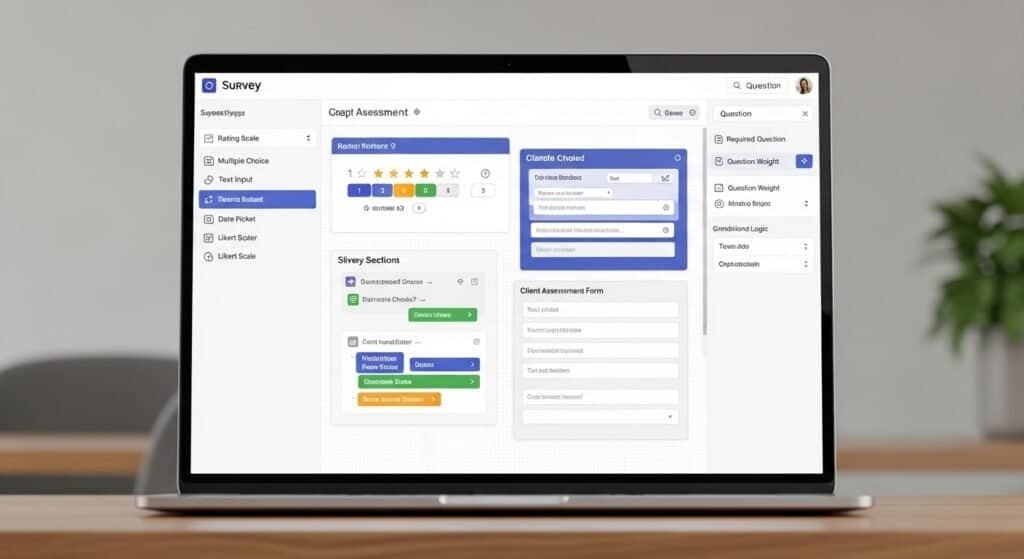
Survey tools allow consultants to create structured questionnaires that gather meaningful information.
Common question formats include:
- multiple-choice questions
- rating scales
- open-ended responses
These formats allow consultants to capture both quantitative and qualitative insights.
Automated Survey Distribution
Automation features allow consultants to distribute surveys automatically.
For example, surveys may be triggered when:
- a consulting engagement begins
- a milestone is reached
- a project concludes
Automation ensures surveys are delivered consistently without requiring manual effort.
Response Tracking
Response tracking systems allow consultants to monitor who has completed surveys and which responses remain outstanding.
Tracking features help consultants maintain high response rates and ensure survey data remains reliable.
Survey Analytics
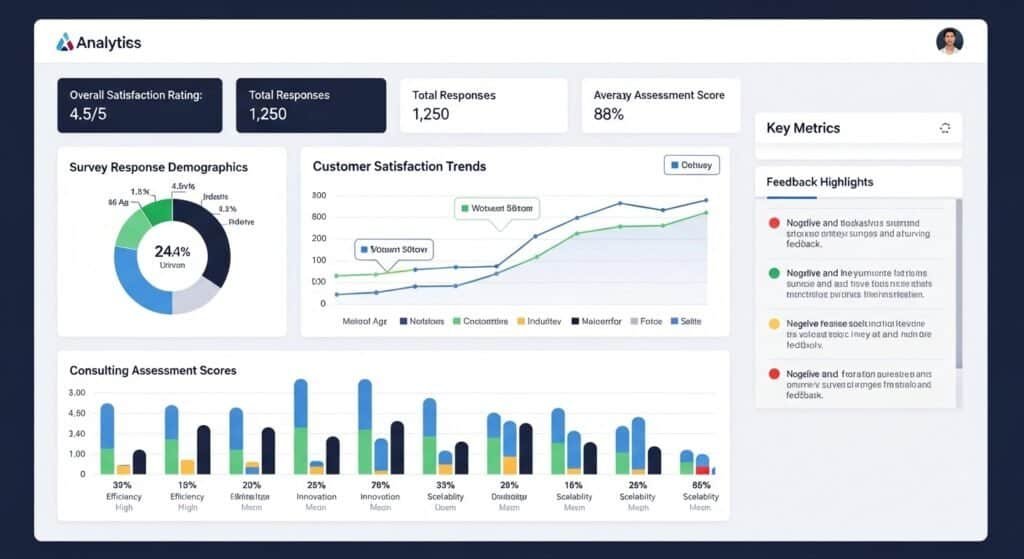
Analytics dashboards allow consultants to evaluate survey responses quickly.
These dashboards often display metrics such as:
- response rates
- average ratings
- sentiment trends
These insights help consultants identify patterns within survey data.
Data Organization
Survey platforms organize responses into structured datasets that can be analyzed over time.
Consultants often combine survey insights with segmentation strategies found in ai client segmentation tools for consultants to understand how different client groups respond to surveys.
This approach allows consultants to refine services for specific client segments.
Recommended Tools
Several survey platforms provide capabilities that are well suited for consulting businesses.
1. Typeform
Typeform is widely known for its interactive survey design interface.
The platform allows consultants to create engaging questionnaires that encourage clients to complete surveys.
Key Features
- conversational survey design
- customizable forms
- response tracking dashboards
Pros
- intuitive user experience
- flexible survey design
Cons
- advanced analytics require paid plans
2. SurveyMonkey
SurveyMonkey provides advanced survey design tools and analytics capabilities.
Many consulting businesses use SurveyMonkey to gather structured feedback and analyze client responses.
Key Features
- customizable questionnaires
- analytics dashboards
- response segmentation
Pros
- powerful analytics tools
- flexible survey structures
Cons
- premium plans required for advanced features
3. Google Forms
Google Forms remains a popular option for consultants who need a simple survey system.
The platform allows consultants to create questionnaires quickly and collect responses through a familiar interface.
Key Features
- easy form creation
- spreadsheet-based response storage
- integration with Google Workspace
Pros
- free to use
- simple setup
Cons
- limited analytics capabilities
4. Tally
Tally offers a lightweight survey platform designed for simplicity.
Consultants can create surveys quickly and distribute them through links or embedded forms.
Key Features
- flexible form builder
- customizable question formats
- response tracking
Pros
- simple interface
- quick survey creation
Cons
- fewer advanced analytics tools
5. Jotform
Jotform provides a versatile form builder that supports complex survey workflows.
Many consultants use Jotform to create assessment questionnaires and structured surveys.
Key Features
- customizable form templates
- automation capabilities
- analytics dashboards
Pros
- powerful form design features
Cons
- advanced features may require paid plans
Workflow Example
Understanding how survey tools operate within a consulting workflow helps clarify their value.
A typical survey workflow might look like this:
Step 1: Pre-Engagement Assessment
Before starting a consulting project, the consultant sends a survey that gathers background information about the client.
This survey helps identify priorities and challenges.
Step 2: Mid-Project Feedback
During the project, the consultant sends a short survey that asks the client to evaluate progress and communication effectiveness.
This feedback allows adjustments during the engagement.
Step 3: Post-Project Evaluation
After the project concludes, a final survey evaluates the results and overall client experience.
These responses help consultants measure the success of the engagement.
Step 4: Ongoing Assessments
Some consultants conduct follow-up surveys months after the project ends to evaluate long-term outcomes.
These insights support continuous improvement.
Integration Possibilities
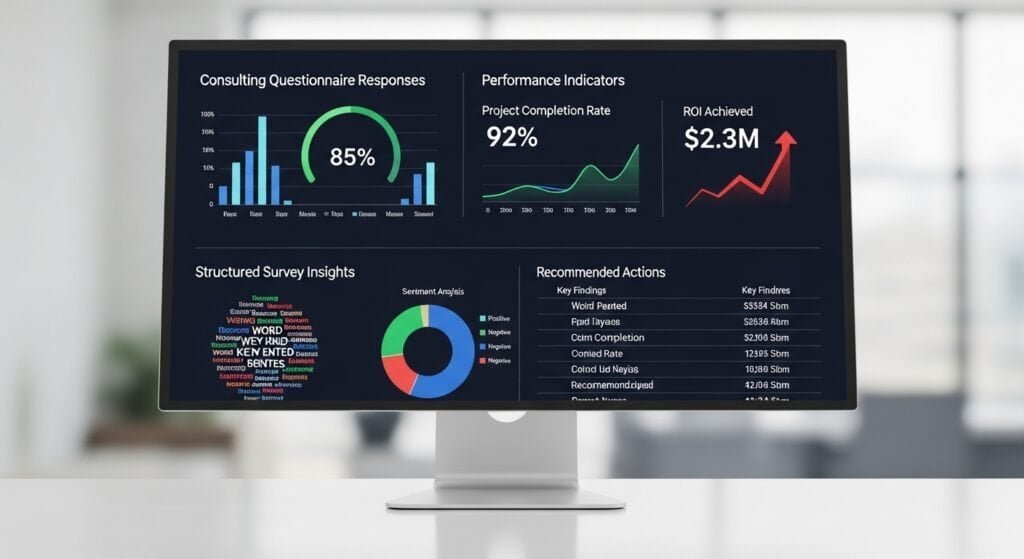
Survey tools often integrate with other systems used by consulting businesses.
Common integrations include:
- CRM platforms
- project management systems
- email marketing tools
- analytics platforms
These integrations allow survey insights to influence other operational processes.
For example, consultants may combine survey insights with feedback insights gathered using ai feedback collection tools for coaches to understand both structured assessments and satisfaction feedback.
These integrations create a more comprehensive understanding of client experiences.
Cost Considerations
Pricing for AI survey tools for consultants varies depending on platform capabilities.
Entry-Level Platforms
Basic survey platforms typically cost between $0 and $20 per month.
These platforms provide simple questionnaire design and response tracking.
Mid-Tier Platforms
More advanced platforms typically cost $20 to $60 per month.
These systems include automation features and analytics dashboards.
Advanced Platforms
Enterprise survey systems may cost $100 or more per month, depending on advanced analytics capabilities.
These platforms are typically used by consulting firms managing large datasets.
Final Thoughts
AI survey tools for consultants provide structured systems that help consulting businesses gather insights and make informed decisions.
Without survey tools, collecting client insights often becomes inconsistent and difficult to analyze. Informal feedback rarely provides the structured data required for strategic decision-making.
Survey platforms solve this challenge by enabling consultants to design questionnaires, automate survey distribution, and analyze responses across multiple engagements.
By integrating survey systems into consulting workflows, businesses gain consistent insights that improve services, strengthen client relationships, and support long-term growth.
FAQ
1. What are AI survey tools for consultants?
AI survey tools for consultants help design questionnaires, distribute surveys automatically, and analyze responses to support consulting decisions.
2. Why do consultants use survey software?
Survey software allows consultants to gather structured client insights, evaluate project outcomes, and support strategic decision-making.
3. How are surveys used during consulting engagements?
Surveys are commonly used during onboarding, project assessments, and post-engagement evaluations to gather client insights.
4. Can survey tools improve consulting services?
Yes. Survey insights help consultants identify patterns in client feedback and refine their consulting methods.
5. What features should consultant survey tools include?
Important features include questionnaire builders, automated survey distribution, response tracking, and analytics dashboards.
Disclaimer
The information provided in this article is for educational and informational purposes only. While we aim to keep content accurate and up to date, software features and availability may change over time. Some links on this page may be affiliate links, meaning we may earn a commission if you purchase through them at no additional cost to you. Always evaluate tools based on your specific business needs before making a decision.