7 Powerful AI Tools for Coaches and Consultants That Transform Growth
AI tools for coaches and consultants are rapidly becoming the operational backbone of modern coaching businesses. Over the past decade, the coaching and consulting industry has expanded dramatically, but many businesses still operate using fragmented systems, manual workflows, and time-intensive administrative processes.
Artificial intelligence is changing that structure.
Instead of relying on manual lead generation, manual scheduling, scattered client notes, and inconsistent revenue tracking, coaches can now build AI-assisted business systems that automate large portions of the operational lifecycle.
For coaches and consultants who want to scale their services beyond one-to-one sessions, AI tools provide infrastructure across five essential layers:
- audience acquisition
- client conversion
- onboarding and delivery
- scalable program infrastructure
- analytics and revenue tracking
This pillar guide organizes the most important categories of AI tools for coaches and consultants based on how real coaching businesses operate.
Rather than reviewing individual software tools in depth, this article focuses on the structural ecosystem of AI tools that support coaching growth. Each section explains where AI tools fit into the operational lifecycle and when a coach should consider implementing them.
The Coaching Business Lifecycle AI Framework
Most coaching businesses follow a predictable lifecycle.
Regardless of niche — business coaching, executive consulting, health coaching, or online education — the structure typically follows this sequence:
- Audience growth
- Lead capture
- Sales conversion
- Client onboarding
- Program delivery
- Retention and upselling
- Revenue analysis and scaling
Many coaches struggle to scale because these stages are not systemized.
Instead of a structured pipeline, many operations rely on:
- social media messages
- spreadsheets
- manual scheduling
- inconsistent onboarding processes
AI tools solve these structural weaknesses by creating automated operational layers.
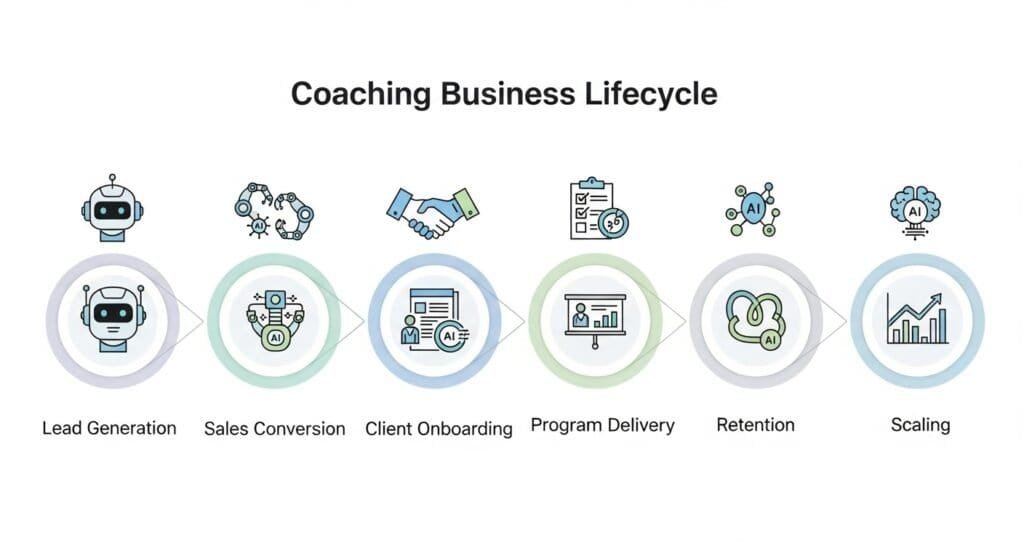
Below is the simplified lifecycle that AI supports.
| Business Stage | Operational Goal | AI Role |
|---|---|---|
| Audience Growth | Attract prospects | content automation & lead magnets |
| Conversion | Turn prospects into clients | funnels & proposals |
| Onboarding | Prepare new clients | intake automation |
| Delivery | Manage coaching programs | course & program platforms |
| Retention | Improve client outcomes | CRM & tracking |
| Scaling | Optimize growth | analytics dashboards |
Understanding this lifecycle helps coaches identify where automation provides the most leverage.
Why AI Tools Are Transforming Coaching Businesses
The traditional coaching model was built around time-for-money exchanges.
A consultant might charge for:
- hourly sessions
- strategy calls
- limited coaching packages
While this model works initially, it has two structural limitations:
- Revenue is capped by available time
- Administrative tasks consume large portions of work hours
AI tools change the economics of coaching businesses by introducing automation and scalable digital infrastructure.
For example:
- AI can generate educational lead magnets automatically
- AI scheduling tools eliminate back-and-forth booking emails
- AI funnel systems can convert leads while the coach is offline
- AI course creation tools allow knowledge to be packaged into digital programs
This allows coaches to shift toward a hybrid model that combines:
- high-value consulting
- digital products
- automated marketing systems
The result is a business capable of serving more clients without increasing operational complexity.
The Modern Coaching Technology Stack
Before exploring individual categories of AI tools, it helps to understand the overall technology stack used by modern coaching businesses.
A typical AI-enabled coaching business relies on tools across several layers.
| Layer | Purpose | Example Functions |
|---|---|---|
| Audience Growth | attract prospects | social content automation |
| Lead Capture | collect contact information | landing pages & lead magnets |
| Sales Systems | convert prospects | funnels & proposal software |
| Client Management | track relationships | CRM platforms |
| Program Delivery | manage coaching programs | course & membership tools |
| Revenue Systems | track payments | billing & subscription tools |
| Analytics | measure performance | dashboards & reporting |
Each layer serves a different purpose.
Some tools are designed to generate new opportunities, while others improve operational efficiency once clients enter the ecosystem.
Understanding these layers helps prevent a common mistake: implementing too many tools before the business actually requires them.
AI Tools for Coaches and Consultants: Lead Generation Systems
Lead generation is the foundation of a coaching business. Without a consistent flow of new prospects, even the most skilled coaches struggle to maintain predictable revenue.
AI tools are increasingly used to automate the early stages of audience growth.
These tools help with:
- content creation
- lead magnet development
- landing page optimization
- social media distribution
Instead of manually creating every asset, coaches can now deploy AI systems that accelerate the production of marketing materials.
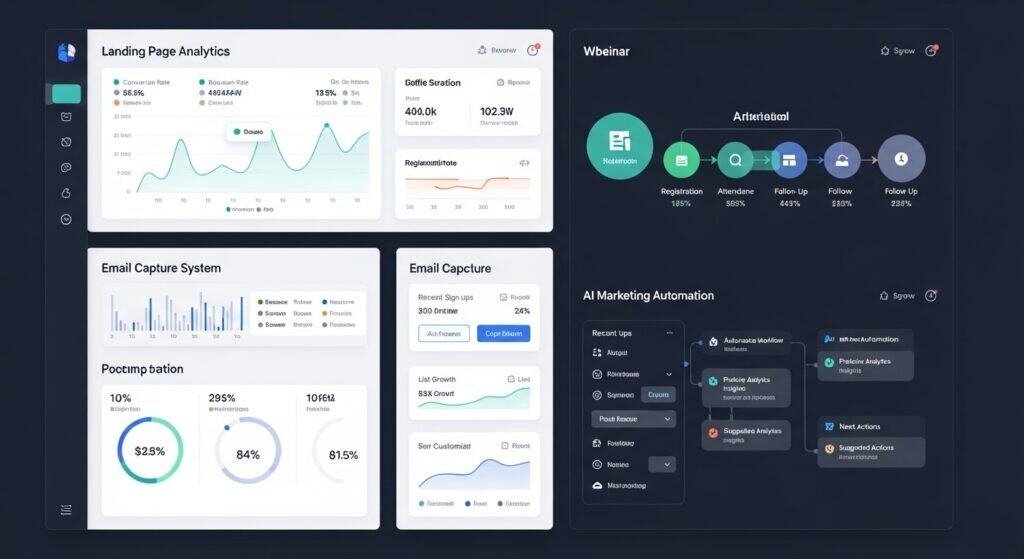
AI Lead Magnet Generators
Lead magnets are one of the most effective ways to capture email subscribers.
Typical examples include:
- ebooks
- strategy frameworks
- checklists
- templates
- mini training guides
AI lead magnet tools help coaches convert their expertise into downloadable resources quickly.
Rather than spending weeks writing content, AI can generate structured outlines, draft materials, and refine messaging.
Lead magnets typically serve as the entry point of the marketing funnel, converting anonymous visitors into identifiable leads.
Coaches interested in specific platforms can explore the detailed guide on
best AI lead magnet generator tools for coaches.
AI Webinar Funnel Builders
Webinars remain one of the highest converting marketing strategies in consulting businesses.
A well-structured webinar funnel can attract leads, deliver educational value, and present coaching offers in a structured format.
AI webinar tools help automate the process by managing:
- registration pages
- reminder emails
- follow-up sequences
- replay distribution
Many successful coaching businesses rely on webinar funnels to introduce potential clients to their frameworks before presenting higher-value offers.
AI Sales Funnel Builders
A sales funnel organizes the journey from initial awareness to purchasing decision.
Instead of sending prospects directly to a generic website, funnel systems guide them through a sequence of educational and persuasive content.
AI funnel tools help optimize:
- page layouts
- messaging clarity
- conversion rates
These tools analyze visitor behavior and identify areas where prospects drop out of the process.
When optimized correctly, funnel systems can dramatically increase the percentage of leads that become paying clients.
A deeper breakdown of these systems is available in the guide on
AI sales funnel software for coaches.
AI Landing Page Builders for Consultants
Landing pages are specialized pages designed to capture leads or sell offers.
Unlike traditional websites, landing pages focus on a single conversion objective.
AI landing page builders assist with:
- headline generation
- page design suggestions
- conversion optimization
- automated testing
These tools help coaches rapidly deploy new marketing campaigns without relying on developers or designers.
AI Social Media Automation for Coaches
Social platforms are often the primary source of new leads for coaching businesses.
However, maintaining consistent content across multiple platforms requires significant time.
AI social media automation tools assist with:
- post creation
- content repurposing
- publishing schedules
- engagement insights
These systems allow coaches to maintain regular visibility while focusing on higher-value activities such as client work and product development.
Comparison Table: Lead Generation AI Tools
| Tool Category | Primary Function | Best For |
|---|---|---|
| Lead Magnet Tools | create downloadable resources | list building |
| Landing Page Builders | capture leads | campaign pages |
| Webinar Funnel Tools | host educational sales events | high-ticket coaching |
| Sales Funnel Builders | guide prospects to offers | conversion optimization |
| Social Automation Tools | publish content | audience growth |
Each of these categories addresses a different part of the top of the funnel, where prospects first discover a coaching brand.
When Coaches Should Implement Lead Generation AI
Not every coaching business needs advanced automation immediately.
Early-stage coaches often benefit most from focusing on:
- landing page systems
- email capture
- simple funnels
More advanced lead generation tools become valuable once audience growth accelerates and manual marketing becomes difficult to manage.
The next stage of the coaching lifecycle involves converting these leads into paying clients.
This is where sales and conversion AI systems become essential.
AI Tools for Coaches and Consultants: Sales & Conversion Systems
After a coaching business begins generating leads, the next operational challenge is conversion. A steady flow of prospects does not automatically translate into revenue. Many coaching businesses lose potential clients because their sales process lacks structure.
AI tools for coaches and consultants are increasingly used to create organized conversion systems that move prospects from curiosity to commitment.
The sales stage usually includes several steps:
- qualifying leads
- presenting offers
- tracking conversations
- sending proposals
- collecting payments
When these processes are handled manually, coaches often experience inconsistent revenue and administrative overload.
AI sales tools improve conversion performance by introducing automation and visibility into the sales pipeline.
AI Funnel Optimization Tools
Even when coaches use marketing funnels, many do not monitor how those funnels perform.
AI funnel optimization tools analyze user behavior to identify problems such as:
- where prospects abandon a page
- which headlines convert better
- which offers generate the highest engagement
These systems process behavioral data to recommend improvements.
For example, an AI funnel tool might detect that most prospects leave a sales page after the pricing section. The system could then suggest restructuring the offer explanation or adjusting the order of information.
Coaches interested in implementing these systems can explore detailed comparisons in the guide on
AI funnel optimization tools for coaches.
AI Coaching Upsell Funnel Software
One of the most underused growth strategies in coaching businesses is upselling.
Many coaches focus exclusively on acquiring new clients while ignoring opportunities to increase revenue from existing customers.
Upsell funnels allow coaches to present additional offers such as:
- advanced coaching programs
- group masterminds
- digital courses
- membership communities
AI upsell funnel tools analyze customer behavior and determine when a client is most likely to accept a higher-value offer.
Instead of manually promoting upgrades, coaches can automate the presentation of new opportunities at strategic moments.
AI Proposal Generators for Consultants
Consulting engagements often require formal proposals.
These documents typically outline:
- the scope of services
- deliverables
- timelines
- pricing structure
Creating proposals manually for every opportunity can consume significant time.
AI proposal generation tools streamline the process by creating structured documents based on predefined templates and service descriptions.
The result is faster proposal delivery and a more consistent presentation of consulting offers.
A full breakdown of these platforms can be found in the guide on
AI proposal generator tools for consultants.
AI Proposal Tracking Tools
Once a proposal is sent, many consultants have little visibility into what happens next.
Did the client read it?
Did they review pricing?
Are they considering alternatives?
AI proposal tracking tools provide insights such as:
- when a document was opened
- how long it was viewed
- which sections received the most attention
These insights allow consultants to follow up with better timing and more relevant messaging.
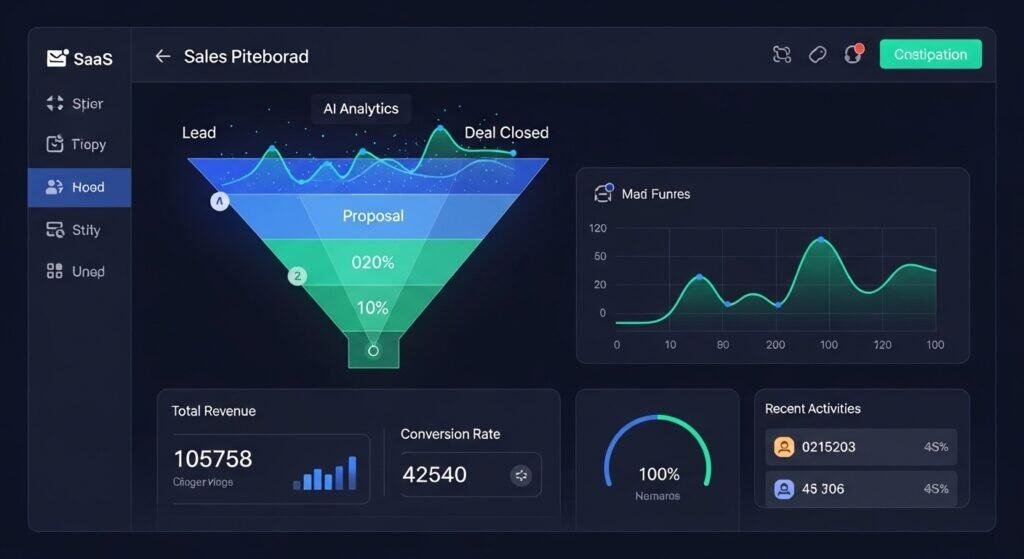
AI Sales Pipeline Tracking Software
For consultants managing multiple opportunities simultaneously, pipeline tracking tools become essential.
AI pipeline systems allow coaches to visualize deals in stages such as:
- new lead
- discovery call completed
- proposal sent
- negotiation
- closed deal
These systems help identify bottlenecks in the sales process and forecast future revenue.
For example, if many deals stall after the discovery call stage, it may indicate that the offer or pricing structure needs refinement.
AI Payment Automation Tools
The final step of conversion is payment.
AI payment automation tools allow coaches to collect payments through systems such as:
- subscription plans
- installment options
- one-time payments
These tools automatically generate invoices, process transactions, and update financial records.
By automating payment collection, coaches reduce administrative workload and ensure a smoother client experience.
Comparison Table: AI Sales & Conversion Tools
| Tool Category | Core Function | Business Benefit |
|---|---|---|
| Funnel Optimization Tools | analyze conversion performance | improve sales pages |
| Upsell Funnel Systems | present upgrade offers | increase client value |
| Proposal Generators | create consulting proposals | faster deal closing |
| Proposal Tracking Tools | monitor proposal engagement | better follow-up timing |
| Pipeline Tracking Software | manage sales stages | revenue forecasting |
| Payment Automation Tools | collect payments automatically | smoother transactions |
These systems collectively strengthen the middle of the funnel, where prospects transition into paying clients.
AI Tools for Coaches and Consultants: Client Onboarding Systems
Once a prospect becomes a client, the onboarding process begins.
For many coaching businesses, onboarding is surprisingly disorganized.
Common issues include:
- incomplete client information
- delayed program access
- missed scheduling details
- inconsistent welcome experiences
AI onboarding tools solve these issues by introducing standardized workflows.
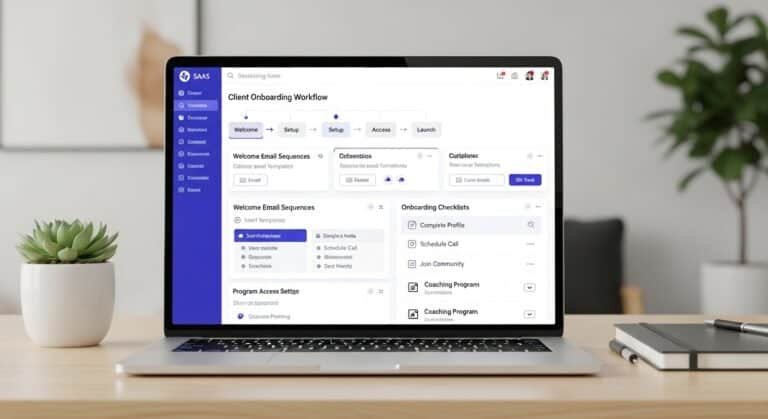
AI Client Onboarding Software
Client onboarding software helps coaches automate the transition from prospect to active client.
Typical onboarding processes include:
- welcome emails
- onboarding questionnaires
- contract signing
- program access instructions
AI onboarding platforms ensure that every new client receives the same structured experience.
This consistency improves professionalism and reduces confusion during the early stages of a coaching relationship.
Coaches exploring implementation options can review the full guide on
AI client onboarding software for coaches.
AI Client Intake Automation Tools
Consultants often require detailed information about their clients before delivering services.
Intake systems collect information such as:
- goals and objectives
- business metrics
- background information
- expectations for the engagement
AI intake tools organize these responses automatically and convert them into structured client profiles.
This reduces preparation time before coaching sessions and improves the quality of insights delivered to clients.
AI Appointment Booking Tools
Scheduling meetings manually can be surprisingly inefficient.
Coaches often spend hours coordinating availability across multiple time zones.
AI appointment scheduling tools automate this process by integrating with digital calendars.
Clients can view available time slots and book appointments instantly without manual coordination.
These tools also prevent double bookings and automatically update both calendars.
AI Appointment Reminder Systems
Missed appointments create operational disruptions.
AI reminder systems reduce no-show rates by sending automatic reminders through:
- email notifications
- SMS messages
- calendar alerts
These reminders are typically scheduled at intervals such as:
- 24 hours before a session
- one hour before a session
Automated reminders significantly improve attendance consistency.
AI Group Coaching Management Tools
Many coaches eventually expand beyond one-to-one sessions into group coaching programs.
Managing group programs requires coordination of multiple participants.
AI group coaching platforms assist with:
- cohort organization
- shared resource libraries
- communication channels
- progress tracking
These systems allow coaches to manage larger communities without increasing administrative workload.
AI Online Program Management Software
Structured coaching programs often include multiple modules or learning stages.
AI program management platforms help organize these educational experiences by managing:
- lesson sequencing
- participant progress tracking
- assignment submissions
These systems ensure that clients move through programs in a structured way.
Comparison Table: AI Client Onboarding & Delivery Tools
| Tool Category | Purpose | Best Use Case |
|---|---|---|
| Onboarding Software | automate new client setup | coaching programs |
| Intake Automation Tools | collect client information | consulting engagements |
| Appointment Booking Tools | schedule meetings | one-to-one coaching |
| Reminder Systems | reduce missed sessions | recurring sessions |
| Group Coaching Platforms | manage cohorts | mastermind programs |
| Program Management Tools | deliver structured training | online coaching programs |
These tools support the operational backbone of coaching businesses by improving efficiency and client experience.
Why Operational Automation Matters
Many coaches underestimate the operational burden of managing growing client numbers.
Without automation, the following tasks accumulate quickly:
- scheduling coordination
- onboarding emails
- session reminders
- client data management
AI systems allow coaches to maintain professional service delivery while freeing time for higher-value activities such as strategy development and client results.
AI Tools for Coaches and Consultants: Course & Digital Product Systems
As coaching businesses mature, many expand beyond one-to-one services and begin building scalable knowledge products.
This shift is important because the traditional consulting model has a structural limitation: revenue is directly tied to time availability.
Digital products remove that limitation.
Instead of delivering knowledge exclusively through live sessions, coaches can package expertise into scalable assets such as:
- online courses
- digital frameworks
- educational workshops
- membership programs
- resource libraries
AI tools for coaches and consultants now play a major role in creating and managing these digital products.
They reduce the time required to build educational materials while improving how those materials are organized and delivered.
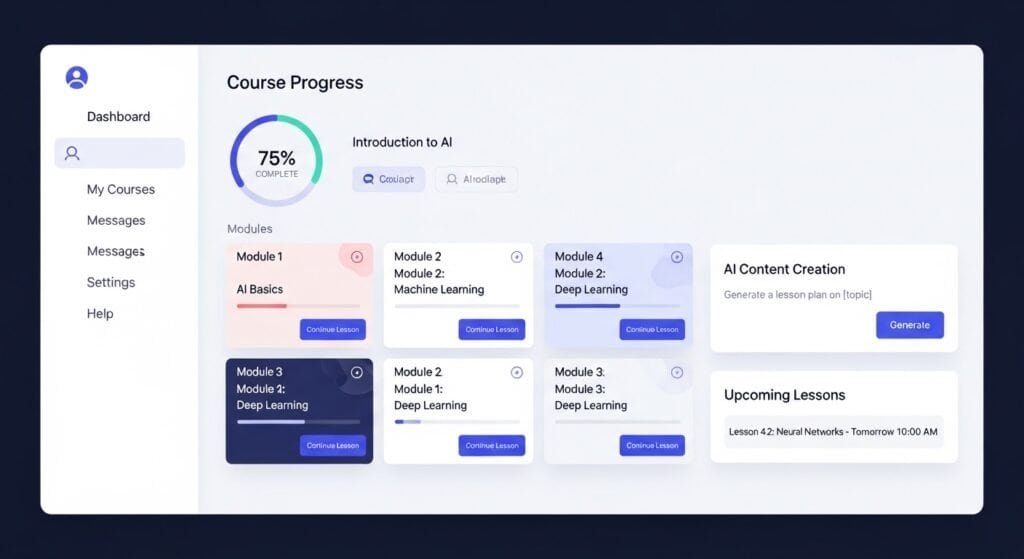
AI Course Creation Tools
Creating a course traditionally required weeks or months of planning.
Coaches had to design curricula, write scripts, organize lessons, and produce learning materials.
AI course creation tools dramatically accelerate this process.
These systems assist with:
- course outline development
- lesson topic generation
- educational structure planning
- content drafting
Instead of starting with a blank page, coaches can begin with AI-generated frameworks that organize knowledge into logical learning sequences.
Once the curriculum is structured, the coach can refine the material and add personal expertise.
A detailed comparison of these platforms can be explored in the guide on
AI course creation tools for coaches.
AI Digital Product Creation Tools
Not all coaching knowledge needs to be packaged as full courses.
Many successful coaching businesses sell smaller digital products such as:
- business templates
- strategy frameworks
- worksheets
- toolkits
AI digital product creation tools help coaches transform expertise into structured assets that can be sold independently or used as lead magnets.
These tools assist with formatting, documentation, and packaging knowledge in ways that are easier for clients to implement.
AI Membership Site Tools
Membership communities allow coaches to create recurring revenue while building long-term relationships with clients.
Membership platforms typically include:
- private community spaces
- educational resource libraries
- monthly coaching sessions
- member discussions
AI membership tools help automate the management of these communities.
They assist with:
- access control
- content recommendations
- engagement tracking
- automated onboarding for new members
Membership systems are especially valuable for coaches who want to transition from a purely service-based model to a hybrid education ecosystem.
AI Digital Course Analytics
Creating a course is only the first step. Understanding how students interact with that course is equally important.
AI analytics tools provide insights such as:
- lesson completion rates
- engagement patterns
- where students drop out
- which lessons generate the most interest
These insights help coaches improve their educational programs over time.
For example, if a large number of students stop watching a lesson halfway through, the coach can restructure the content to maintain engagement.
AI Workshop Automation Tools
Workshops are often used by coaches to deliver concentrated learning experiences.
These may include:
- live training sessions
- intensive strategy workshops
- educational masterclasses
AI workshop automation tools help manage the operational side of these events.
They automate tasks such as:
- registration management
- reminder emails
- resource distribution
- session follow-up messages
This ensures that workshops run smoothly without excessive administrative work.
AI Webinar Replay Automation
Many coaching businesses rely on webinars to educate potential clients about their methodologies.
However, webinars often generate the most value after the live event.
AI webinar replay automation tools manage the distribution of recorded sessions and ensure that new leads continue discovering the content.
These tools automate:
- replay access links
- follow-up sequences
- lead segmentation based on viewing behavior
By extending the lifespan of webinar content, coaches can continue generating leads long after the original presentation.
Comparison Table: Course & Digital Product AI Tools
| Tool Category | Primary Function | Business Advantage |
|---|---|---|
| Course Creation Tools | structure educational programs | scalable knowledge delivery |
| Digital Product Tools | package frameworks & templates | new revenue streams |
| Membership Platforms | manage communities | recurring income |
| Course Analytics Tools | analyze student behavior | improve programs |
| Workshop Automation Tools | manage event logistics | smooth event execution |
| Webinar Replay Systems | distribute recorded webinars | extended lead generation |
These tools enable coaches to move beyond one-to-one services and build scalable education ecosystems.
AI Tools for Coaches and Consultants: CRM & Client Intelligence
As coaching businesses grow, managing client relationships becomes more complex.
Important information about clients must be tracked consistently, including:
- communication history
- goals and objectives
- progress metrics
- engagement patterns
Customer Relationship Management systems, commonly known as CRM platforms, serve as the central database for this information.
AI-powered CRM systems enhance traditional CRM platforms by adding intelligence and automation.
AI Coaching CRM Software
CRM systems allow coaches to organize all client interactions in one place.
Key features typically include:
- client profiles
- communication tracking
- interaction history
- relationship notes
AI-enhanced CRM tools analyze these interactions to identify patterns.
For example, the system might detect that certain types of clients benefit from specific coaching approaches or educational resources.
These insights help coaches tailor their services more effectively.
AI Client Progress Tracking Software
Measuring progress is essential for coaching relationships.
Clients want to see clear evidence that they are moving closer to their goals.
AI progress tracking tools help monitor key metrics related to client development.
Depending on the coaching niche, these metrics may include:
- business growth indicators
- habit development
- performance benchmarks
- milestone achievements
These tools transform subjective coaching conversations into structured progress evaluations.
AI Client Segmentation Tools
Not all clients have the same needs.
Some may require intensive strategy sessions, while others benefit from structured educational programs.
AI segmentation tools categorize clients based on factors such as:
- engagement behavior
- program participation
- purchase history
- learning preferences
Segmentation allows coaches to deliver more personalized experiences without manually analyzing every client profile.
AI Client Journey Mapping Tools
A client journey includes every interaction a client has with a coaching business.
This may involve:
- discovering the brand
- attending a webinar
- joining a program
- participating in community discussions
AI journey mapping tools visualize these interactions and help coaches understand the pathways clients follow.
This allows businesses to identify friction points where clients disengage and improve the overall experience.
AI Feedback Collection Tools
Feedback is critical for improving coaching programs.
However, collecting feedback consistently can be difficult.
AI feedback systems automate the process by sending structured surveys at key points in the client journey.
These tools also analyze responses using sentiment analysis to identify patterns in client satisfaction.
AI Survey Tools for Consultants
Consultants frequently use surveys to conduct research before delivering recommendations.
AI survey tools assist with:
- questionnaire design
- response categorization
- insight extraction
These tools help consultants analyze large sets of responses quickly and identify meaningful trends.
Comparison Table: CRM & Client Intelligence Tools
| Tool Category | Core Function | Benefit |
|---|---|---|
| CRM Systems | store client information | centralized data |
| Progress Tracking Tools | monitor development | measurable outcomes |
| Client Segmentation Tools | group clients by behavior | personalized services |
| Journey Mapping Tools | visualize client interactions | improve experience |
| Feedback Tools | collect client opinions | service improvement |
| Survey Tools | gather research insights | better consulting recommendations |
These systems support long-term client relationships, which are often the most valuable assets in consulting businesses.
AI Tools for Coaches and Consultants: Revenue & Billing Systems
As coaching businesses expand, managing revenue streams becomes increasingly complex. Many coaches begin with simple payment links or manual invoices, but as services evolve into multiple offers — such as coaching packages, group programs, digital courses, and memberships — financial tracking requires more sophisticated systems.
AI tools for coaches and consultants now support revenue management by automating billing, monitoring financial performance, and simplifying subscription models.
These systems ensure that financial operations remain organized even as the business grows.
AI Coaching Revenue Tracking Software
Revenue tracking tools provide visibility into how income flows through a coaching business.
Instead of manually reviewing payment records across different platforms, AI systems consolidate financial data into centralized dashboards.
These dashboards typically monitor:
- monthly revenue trends
- revenue by product type
- subscription growth
- client lifetime value
Understanding these metrics helps coaches identify which offers generate the most sustainable income.
For example, a coach might discover that group programs generate more consistent revenue than one-to-one consulting sessions. This insight can guide strategic decisions about where to focus future effort.
AI Coaching Subscription Management Software
Many coaching businesses move toward recurring revenue models such as memberships or subscription-based programs.
Subscription platforms automate the management of these recurring payments.
AI subscription tools help manage:
- recurring billing cycles
- subscription renewals
- cancellations
- payment recovery
They also provide analytics about subscriber retention and churn rates.
This allows coaches to monitor the health of their recurring revenue streams and identify areas for improvement.
AI Invoice Automation Tools
For consultants delivering customized services, invoicing remains an essential financial process.
AI invoice automation tools generate invoices automatically based on predefined pricing structures.
These systems also handle:
- payment reminders
- overdue notifications
- invoice tracking
Automating these tasks ensures that payments are collected consistently without requiring constant manual follow-up.
AI Sales Tracking Tools
Sales tracking systems monitor revenue performance across various offers.
AI tools analyze sales patterns to help coaches understand:
- which offers convert best
- which marketing channels generate the most revenue
- how sales fluctuate over time
These insights enable more informed decisions about pricing strategies and promotional campaigns.
AI Automated Billing Systems
Billing automation simplifies financial administration.
Instead of manually managing transactions, AI billing systems automatically:
- process payments
- record transactions
- update financial dashboards
For coaches running multiple programs simultaneously, automated billing ensures that financial data remains accurate and organized.
Comparison Table: Revenue & Billing AI Tools
| Tool Category | Function | Strategic Benefit |
|---|---|---|
| Revenue Tracking Tools | monitor income performance | financial clarity |
| Subscription Management | manage recurring payments | predictable revenue |
| Invoice Automation Tools | generate invoices automatically | time savings |
| Sales Tracking Tools | analyze sales performance | better pricing decisions |
| Automated Billing Systems | process payments automatically | operational efficiency |
Together, these systems form the financial backbone of a coaching business.
AI Tools for Coaches and Consultants: Analytics & Performance Intelligence
While automation tools improve efficiency, analytics tools provide the insight needed for long-term growth.
AI tools for coaches and consultants increasingly include sophisticated analytics capabilities that analyze data from multiple sources.
These systems help answer important questions such as:
- Which marketing campaigns generate the most clients?
- Which programs produce the best client outcomes?
- Which content attracts the most qualified leads?
Without analytics, coaches must rely on guesswork. AI-driven dashboards transform business performance into measurable data.
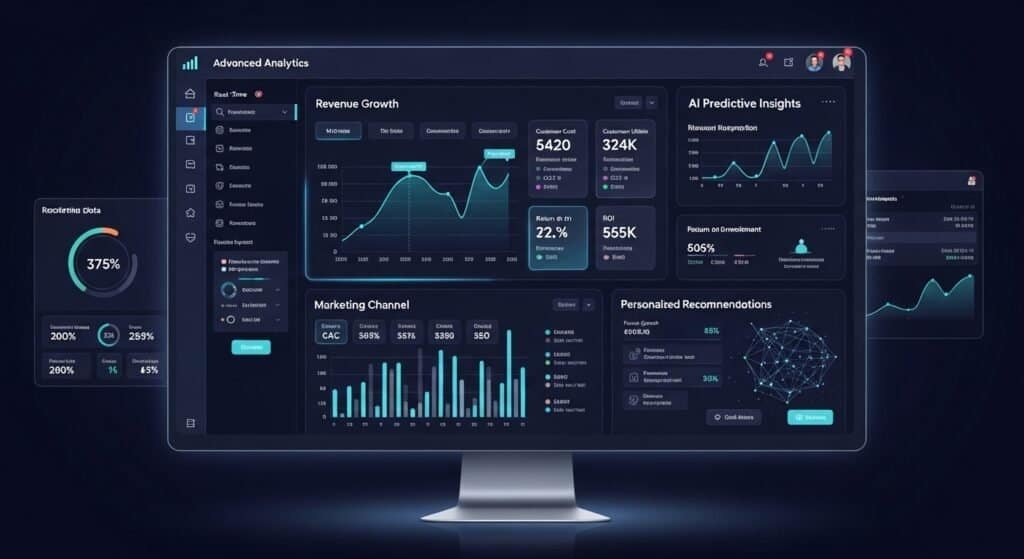
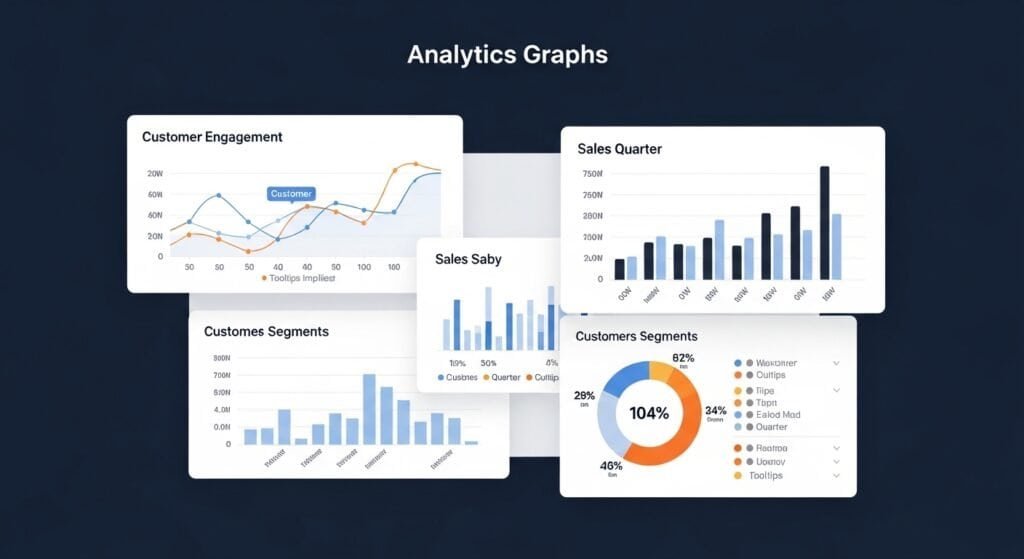
AI Coaching Analytics Dashboards
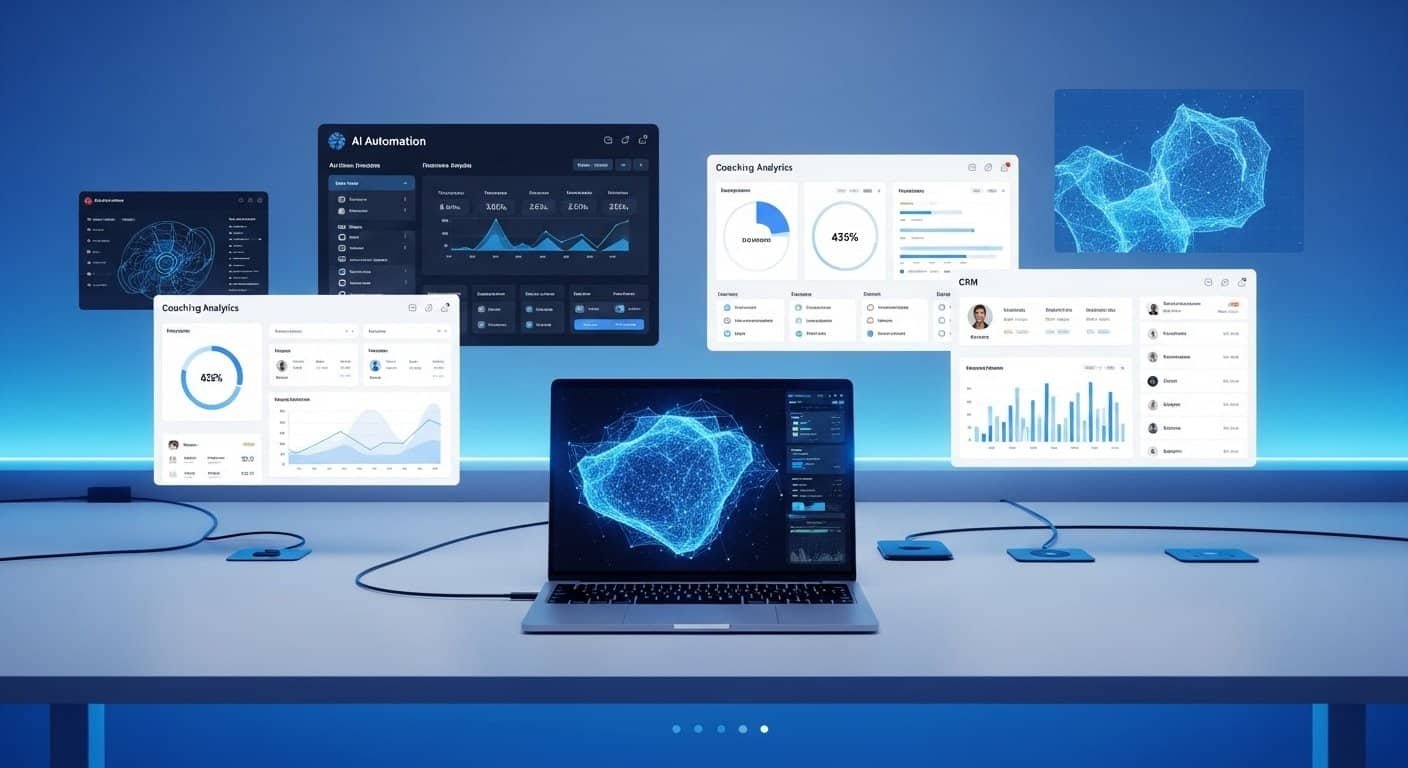
Analytics dashboards combine information from different business systems into a single interface.
Typical data sources include:
- marketing campaigns
- sales funnels
- CRM platforms
- course platforms
These dashboards display key metrics such as:
- lead conversion rates
- program enrollment trends
- customer acquisition costs
- engagement levels
By monitoring these metrics regularly, coaches can make more informed strategic decisions.
AI Coaching Performance Analytics
Performance analytics tools focus on measuring how well coaching programs deliver results.
These systems analyze:
- client progress metrics
- program completion rates
- client satisfaction levels
Understanding these patterns helps coaches refine their programs and improve outcomes for future clients.
AI Coaching Marketing Analytics
Marketing analytics tools analyze the performance of content and campaigns.
They track metrics such as:
- traffic sources
- engagement rates
- email campaign performance
- conversion behavior
These insights allow coaches to allocate marketing resources more effectively.
For example, analytics might reveal that webinar funnels produce significantly higher conversion rates than social media promotions.
AI Content Automation & Scheduling
Content plays a critical role in attracting new clients.
However, creating and publishing consistent content can become overwhelming.
AI content automation tools help manage this process by assisting with:
- content generation
- editorial planning
- publishing schedules
Scheduling systems ensure that content appears consistently across platforms, improving audience engagement and visibility.
AI Email Nurture Automation
Email remains one of the most reliable communication channels for coaching businesses.
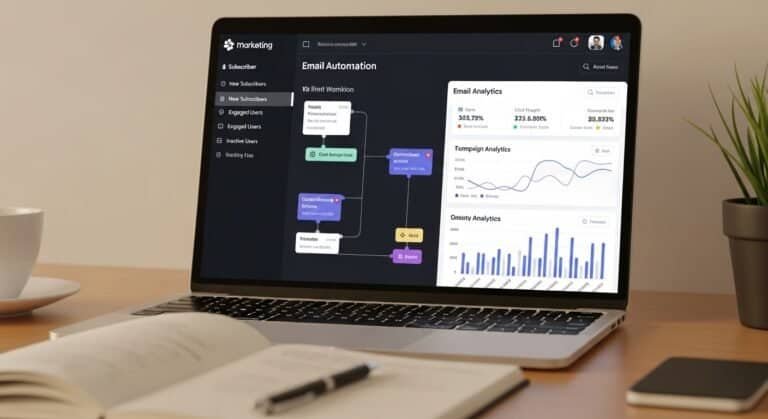
AI email nurture systems help maintain relationships with leads and clients by automating educational email sequences.
These sequences often include:
- welcome emails
- educational content
- program invitations
- promotional announcements
By delivering relevant content automatically, coaches can maintain engagement without sending each message manually.
Comparison Table: Analytics & Intelligence Tools
| Tool Category | Primary Purpose | Growth Advantage |
|---|---|---|
| Analytics Dashboards | monitor overall performance | strategic insight |
| Program Analytics | evaluate coaching outcomes | program improvement |
| Marketing Analytics | measure campaign results | better marketing ROI |
| Content Automation Tools | manage content publishing | consistent visibility |
| Email Nurture Systems | automate email communication | stronger client relationships |
These systems transform operational data into actionable intelligence for growth.
Choosing AI Tools Based on Coaching Business Model
Not all coaching businesses require the same AI tools.
The most effective technology stack depends on the structure of the coaching model.
One-to-One Coaching Businesses
Coaches focused on individualized consulting typically benefit most from:
- CRM systems
- appointment scheduling tools
- proposal generation platforms
These tools help manage personalized relationships efficiently.
Group Coaching Programs
Group coaching businesses must coordinate multiple participants simultaneously.
Important tools include:
- group management platforms
- onboarding automation
- progress tracking systems
These systems help manage cohorts effectively.
Course-Based Coaching Businesses
Course creators prioritize tools that support scalable education.
Essential tools include:
- course platforms
- membership systems
- analytics dashboards
These systems enable coaches to serve large audiences with minimal operational overhead.
Hybrid Coaching Businesses
Many successful coaching businesses combine several models.
A hybrid approach may include:
- consulting services
- group coaching
- online courses
- digital resources
Hybrid businesses require integrated systems that combine CRM, marketing automation, course platforms, and analytics tools.
Beginner vs Scaling Coaching Businesses
Another important factor when selecting AI tools for coaches and consultants is the stage of the business.
Beginner Coaching Businesses
Early-stage coaches should prioritize tools that help generate and convert leads.
Important systems include:
- landing page builders
- scheduling tools
- simple funnel platforms
At this stage, simplicity and affordability are more important than advanced automation.
Scaling Coaching Businesses
Once revenue becomes consistent, operational efficiency becomes more important.
Scaling businesses benefit from tools that support:
- client management
- program analytics
- subscription revenue
These systems allow coaches to handle larger client volumes without increasing workload proportionally.
The Future of AI in Coaching Businesses
Artificial intelligence will continue to transform how coaching businesses operate.
Future developments may include:
- AI-generated personalized coaching insights
- predictive analytics for client outcomes
- automated program customization
As these technologies evolve, coaching businesses will increasingly rely on AI not only for automation but also for strategic decision-making.
Coaches who adopt these tools early will likely benefit from improved efficiency and stronger competitive positioning.
Frequently Asked Questions
1. What are AI tools for coaches and consultants?
AI tools for coaches and consultants are software platforms that automate tasks such as lead generation, client onboarding, scheduling, marketing automation, analytics, and digital product creation.
These tools allow coaching businesses to operate more efficiently while scaling services beyond traditional one-to-one sessions.
2. Which AI tools do coaching businesses need first?
Most coaching businesses should begin with tools that support the core business lifecycle:
1. Lead generation systems
2. Appointment scheduling tools
3. Sales funnel platforms
4. CRM systems for client management
These tools help build a stable operational foundation before implementing more advanced automation.
3. Can AI tools help coaches scale their business?
Yes. AI tools help coaching businesses scale by automating repetitive operational tasks such as:
1. Content creation
2. Email follow-ups
3. Onboarding workflows
4. Course delivery
By reducing administrative workload, coaches can focus on delivering higher-value services and expanding their reach.
4. Are AI tools suitable for beginner coaches?
Yes, but beginner coaches should prioritize simple tools that support:
1. Audience growth
2. Appointment scheduling
3. Basic email marketing
More complex automation systems are typically more useful once the business begins to scale.
5. What are the best AI tools for online coaching businesses?
The best AI tools depend on the structure of the coaching business.
Common categories include:
1. Funnel builders for client acquisition
2. CRM platforms for relationship management
3. Course platforms for scalable education
4. Analytics dashboards for business insights
Each category supports a different stage of the coaching business lifecycle.
6. Do AI tools replace the role of a coach?
No. AI tools assist with operational tasks and business management, but the core value of coaching still comes from human expertise, experience, and guidance.
AI enhances coaching businesses but does not replace the coach.
Final Perspective
The coaching industry is evolving rapidly as technology reshapes how services are delivered and scaled.
AI tools for coaches and consultants now support every stage of the business lifecycle, from attracting prospects to delivering educational programs and analyzing results.
Instead of relying on manual workflows, modern coaching businesses increasingly build AI-enabled operational systems that improve efficiency and create opportunities for scalable growth.
Understanding how these tools fit together allows coaches to design business infrastructures capable of supporting long-term success.
This pillar guide provides a structured overview of the AI ecosystem available to coaches and consultants. Detailed tool comparisons and recommendations can be explored in the specialized pages throughout this site.
Disclaimer
The information provided in this article is for educational and informational purposes only. While we aim to keep content accurate and up to date, software features and availability may change over time. Some links on this page may be affiliate links, meaning we may earn a commission if you purchase through them at no additional cost to you. Always evaluate tools based on your specific business needs before making a decision.